12 hr
Mostar & Kravica Waterfalls Day Trip from Dubrovnik
- Expert local guide
- Small group
- Skip-the-line access
- Free cancellation
Mostar and Kravice Waterfalls — Day Tours from Coastal Cities
Ottoman bridges and travertine cascades, a twin portrait of Herzegovina
Compare fares, pick the fit — all bookings are mobile-voucher and eligible for free cancellation where shown.
12 hr
12 hr
8 hr
| Experience | Duration | Rating | Transfers | Skip-the-line | Guide | Small group | Price | |
|---|---|---|---|---|---|---|---|---|
|
Guided Experience
Most popular
Mostar & Kravica Waterfalls Day Trip from Dubrovnik
|
12 hr | ★ 4.6 | ✓ | ✓ | ✓ | ✓ | €30 | Book → |
|
Guided Experience
Mostar & Kravica Waterfalls Day Trip from Dubrovnik
|
12 hr | ★ 4.7 | ✓ | ✓ | ✓ | ✓ | €30 | Book → |
|
Guided Experience
Herzegovina Highlights: Blagaj, Počitelj & Kravice Waterfalls
|
8 hr | ★ 5.0 | ✓ | ✓ | ✓ | ✓ | €40 | Book → |
Worth it for nature lovers and Mostar combo trips
The 15 BAM entrance fee delivers solid value when you factor in the natural amphitheater of cascades, swimming access beneath the travertine falls, and the fact that most visitors fold Kravice into a Mostar day trip rather than treating it as a standalone destination. The waterfalls span roughly 120 meters across multiple tiers, creating a setting that justifies the cost for anyone drawn to natural pools and riverside picnic zones. Mostar and Kravice waterfalls pair logically—the drive takes under 40 minutes, and guided tours often bundle both for around 50–70 BAM total, which spreads the transport expense. If you're already in Mostar, the marginal cost of adding Kravice is low. Solo travelers focused purely on the falls may find the fee steep for what amounts to a 90-minute visit, but families and couples who swim, explore the boardwalks, and linger for lunch extract better per-hour value. Skip it only if waterfalls hold zero appeal or your Mostar itinerary is already packed.
Bottom line: Mostar and Kravice waterfalls tours deliver the best value per BAM spent, especially when transport and swimming time are factored in.
These experiences offer distinct benefits; those seeking cultural immersion and swimming prefer the mostar and kravice waterfalls, while nature enthusiasts prioritize the expansive lake systems of Plitvice. Choosing between these excursions depends on whether you value heritage sites or large-scale limestone geology.
|
Top pick Kravice/Mostar |
Plitvice Lakes | |
|---|---|---|
| What you see | Tufa waterfall and stone bridge | 16 terraced lakes and falls |
| How you get there from Dubrovnik | 3 hours by road | 4-5 hours by road |
| Swimming allowed | Yes | No |
| Cultural add-on | Mostar Old Town visit | None |
| Typical price | 60–90 EUR (tour average) | 80–120 EUR (tour average) |
| Duration | 10–12 hours | 12–14 hours |
| Best season | May–September | April–October |
| See tickets & prices |
Verdict: Securing mostar and kravice waterfalls tickets provides a balanced day of history and swimming, whereas Plitvice Lakes demands more transit time for a purely natural landscape experience.
Hand-picked experiences loved by thousands of travelers
12 hours
Free Cancellation
Cross into Bosnia and Herzegovina to explore cascading waterfalls, Ottoman heritage, and medieval villages
10 hours
Free Cancellation
Explore Bosnia's highlights in an intimate group of 8 or fewer—cascading falls, Ottoman heritage, and coastal vistas.
12 hours
Free Cancellation
Cross into Bosnia and Herzegovina to explore Ottoman heritage, the iconic Old Bridge, and stunning cascades
5 hours 30 minutes
Free Cancellation
Discover Bosnia's stunning cascades on this relaxing afternoon escape with swimming and scenic stops
8 hours
Free Cancellation
Discover medieval towns, spiritual sites, and stunning waterfalls on this expertly guided small-group adventure.
12 hours
Free Cancellation
Explore five captivating cities, medieval architecture, and cascading waterfalls in a full-day Herzegovina adventure
10 hours
Free Cancellation
Journey through Herzegovina to explore ancient Roman ruins, stunning waterfalls, and Mostar's legendary bridge
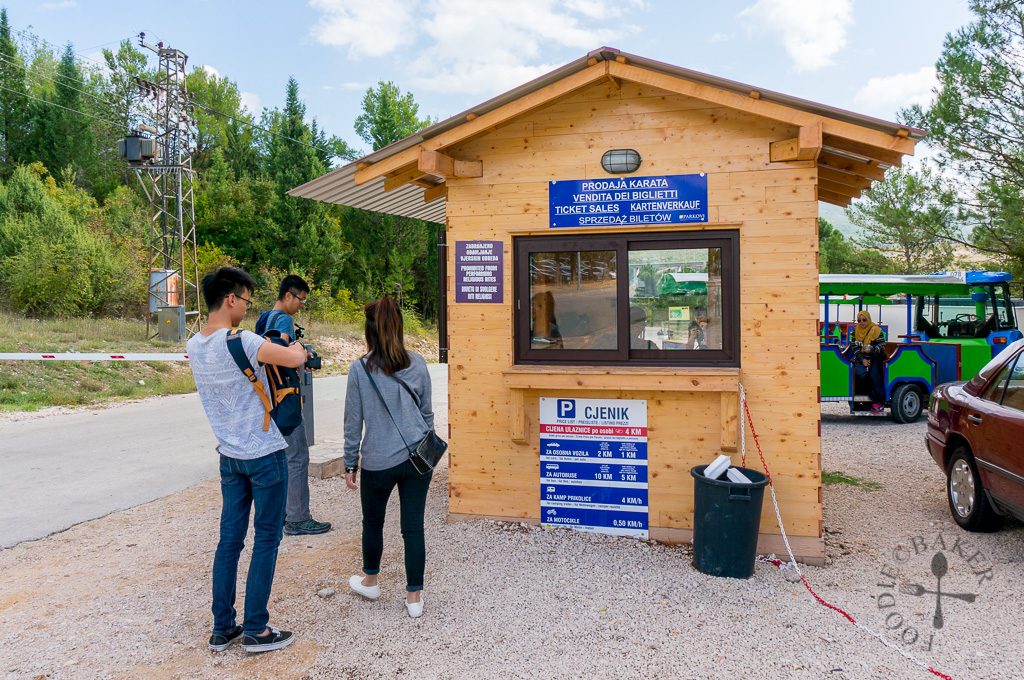
Pay the 15 BAM entrance fee at the booth near the parking area before heading down to the falls.
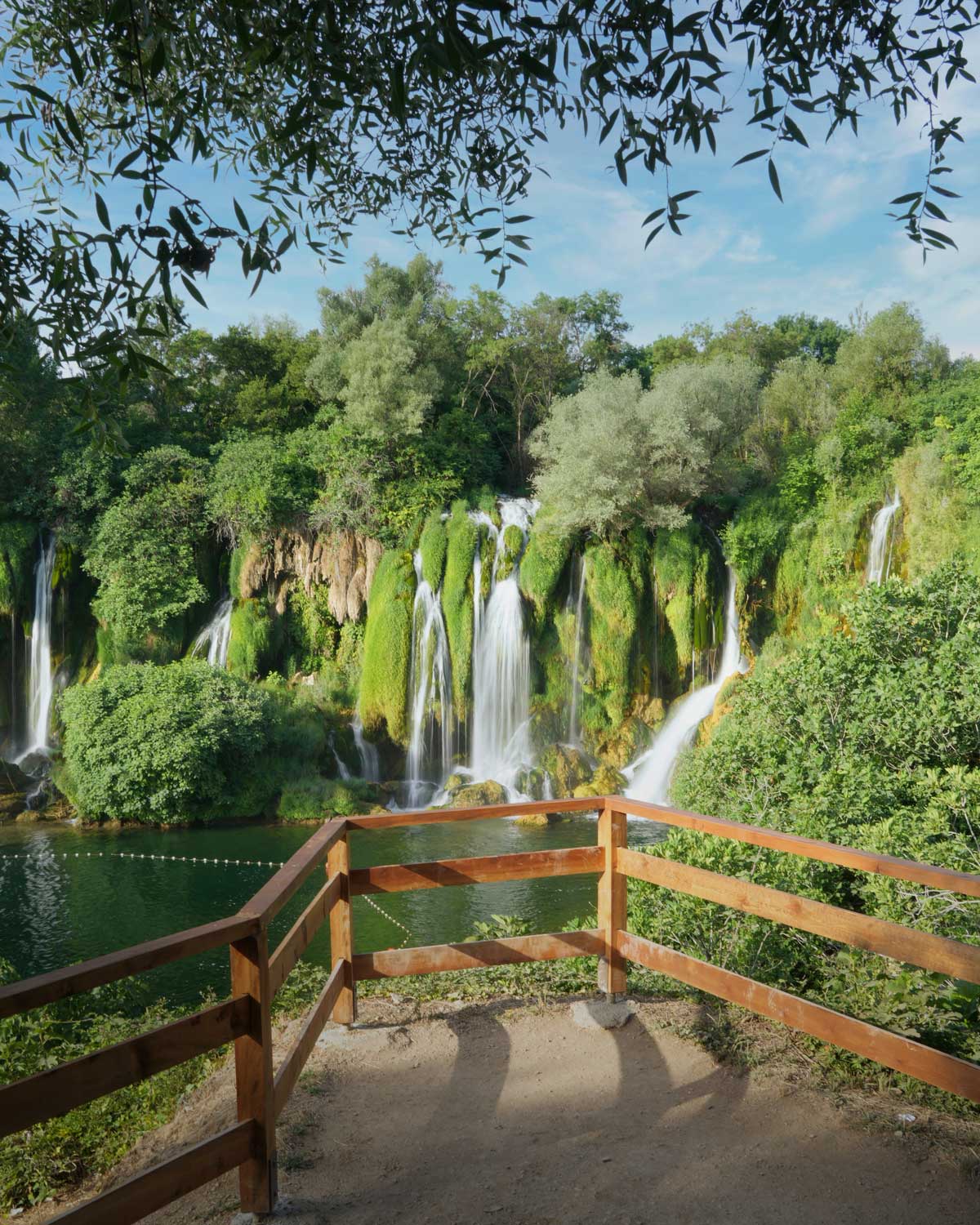
Walk down the gravel and stone path to the wooden platforms overlooking the main cascade.
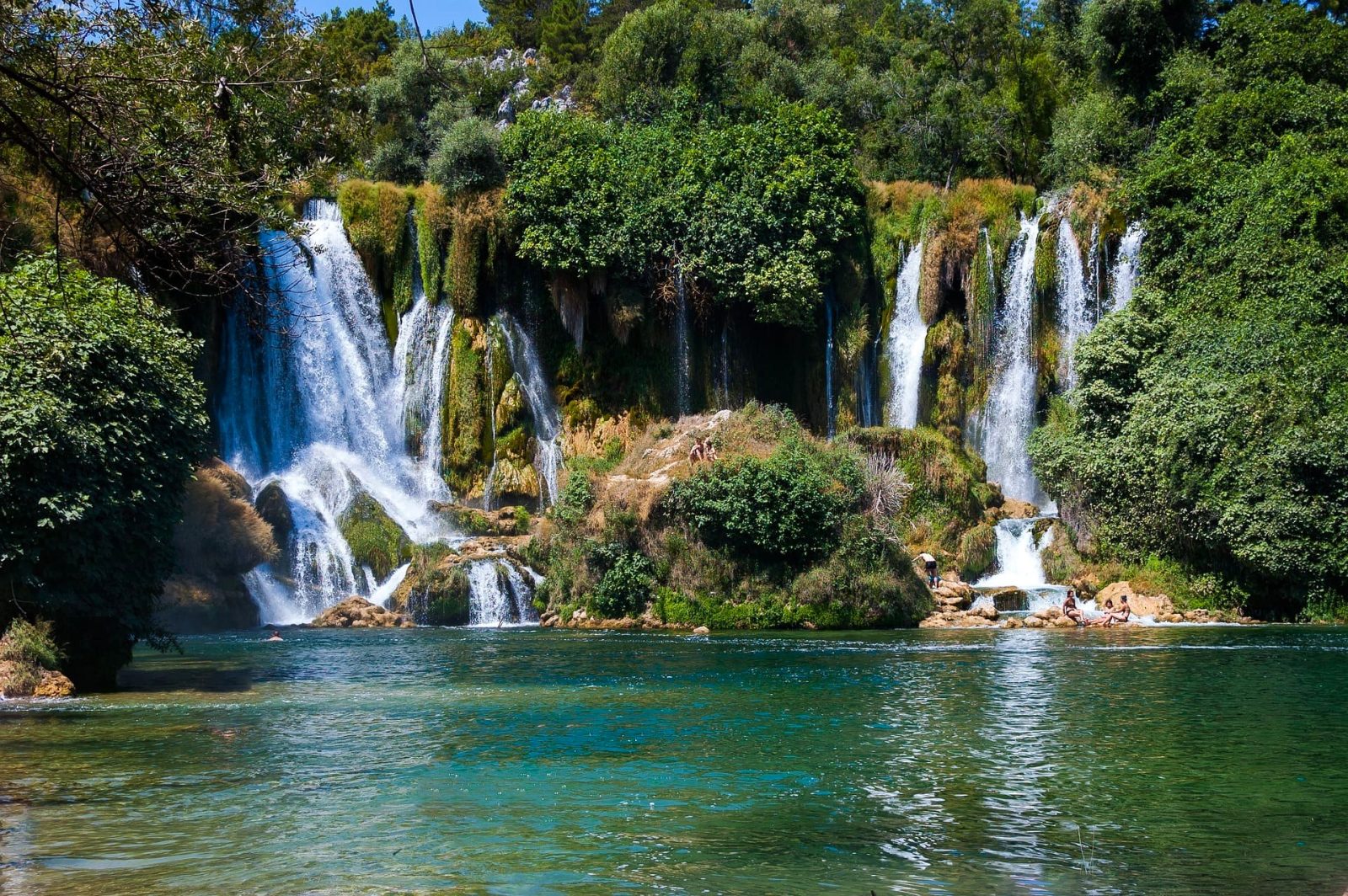
Cool off in the designated swimming area below the falls, away from the strongest current.
Follow the paths along the Trebižat River for wider views of the horseshoe-shaped falls.
Head back up to the parking area, where small restaurants and souvenir stands are located.
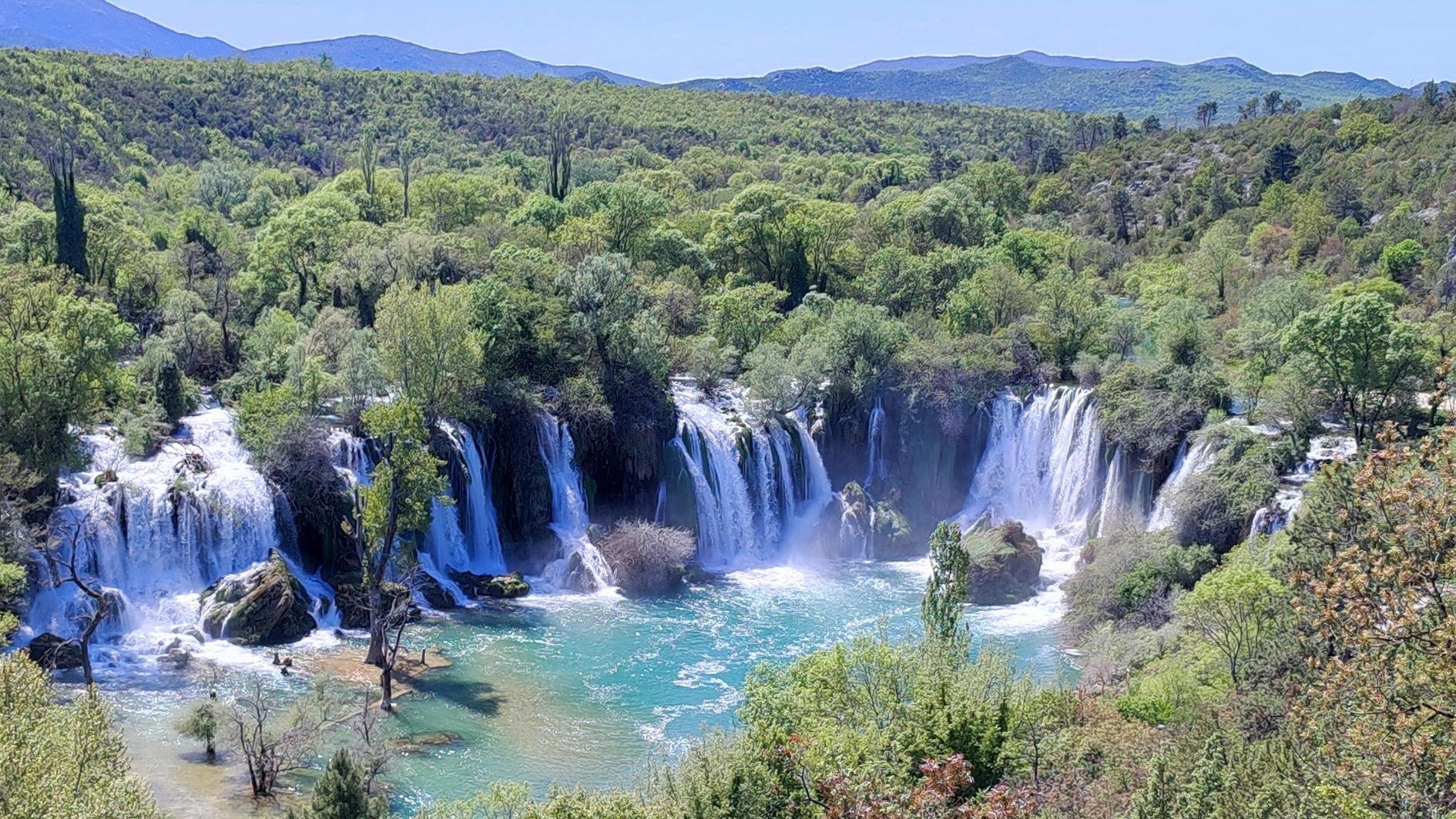
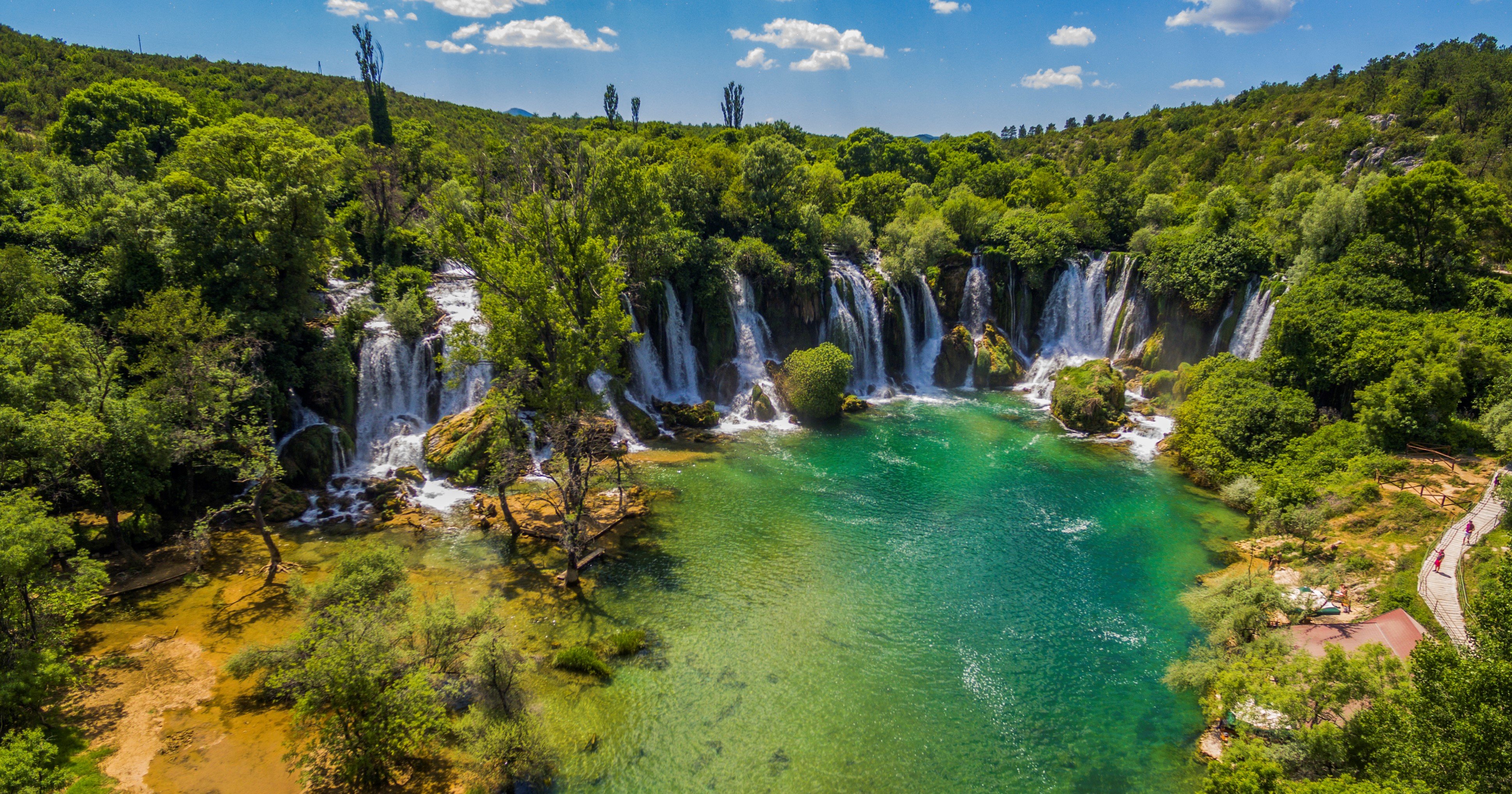
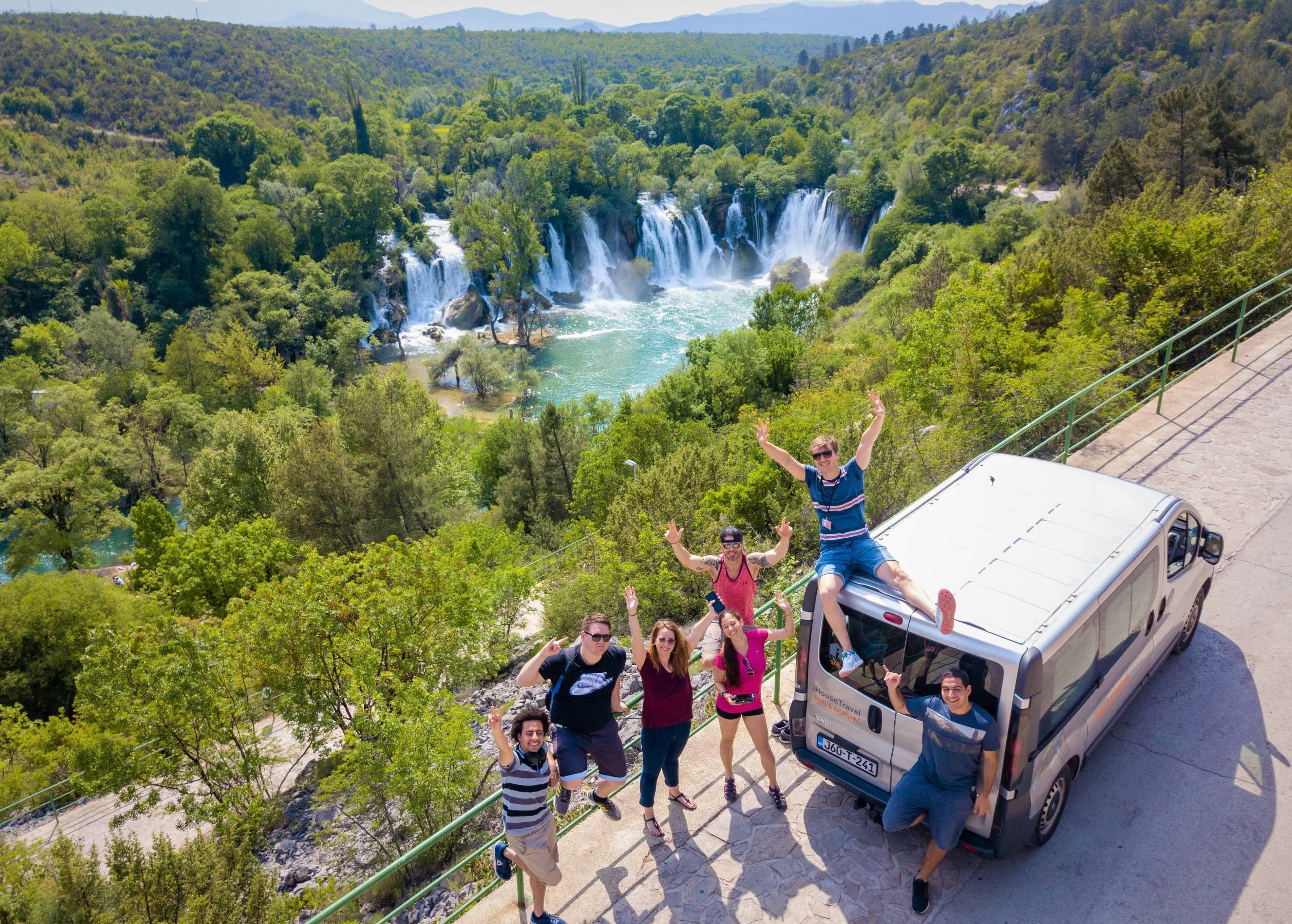
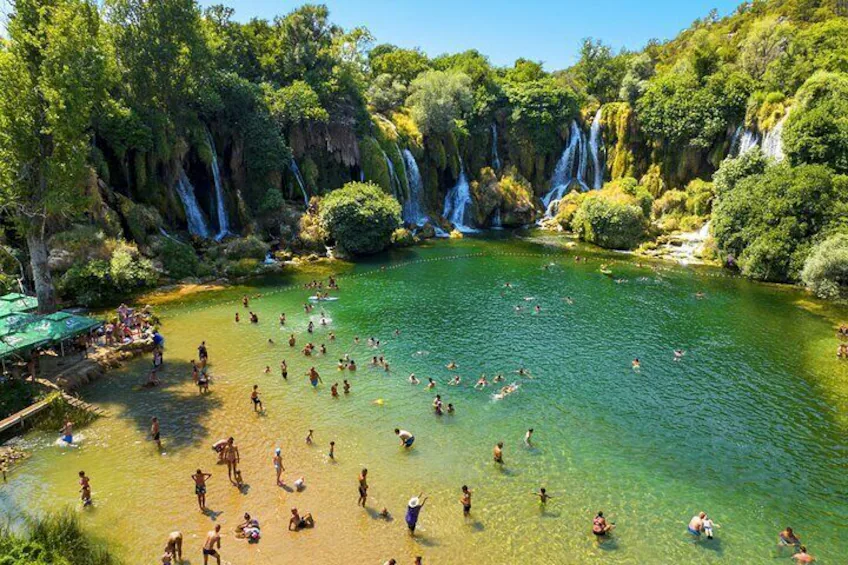
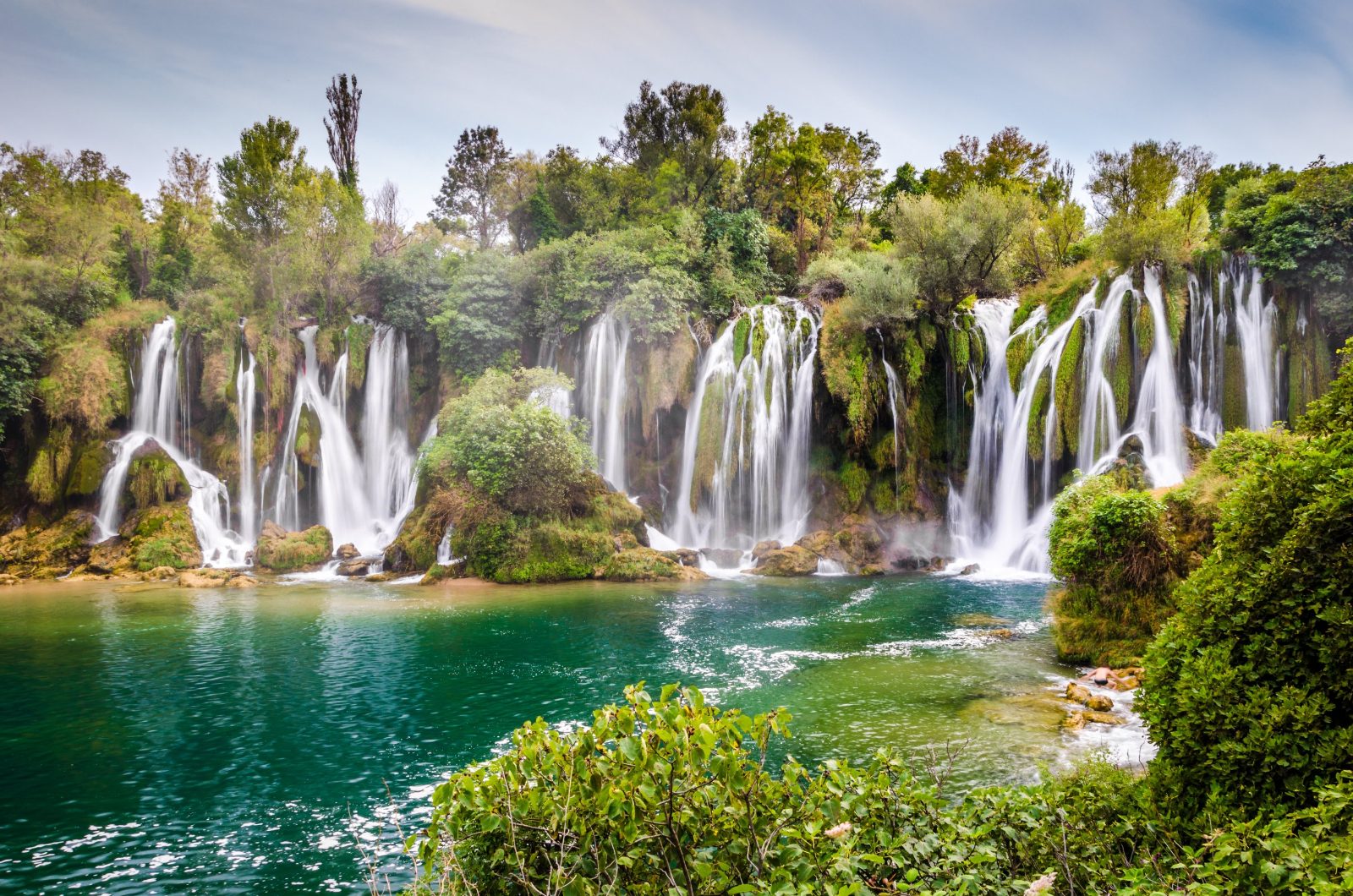
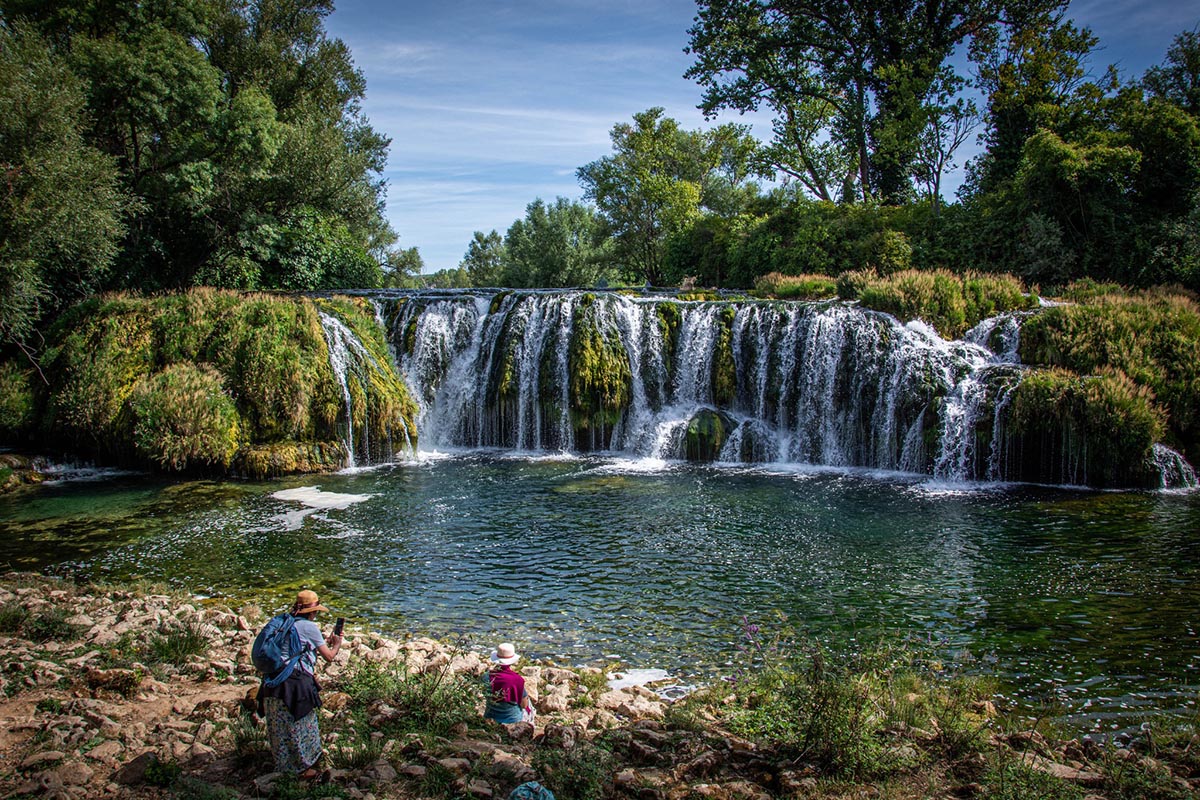
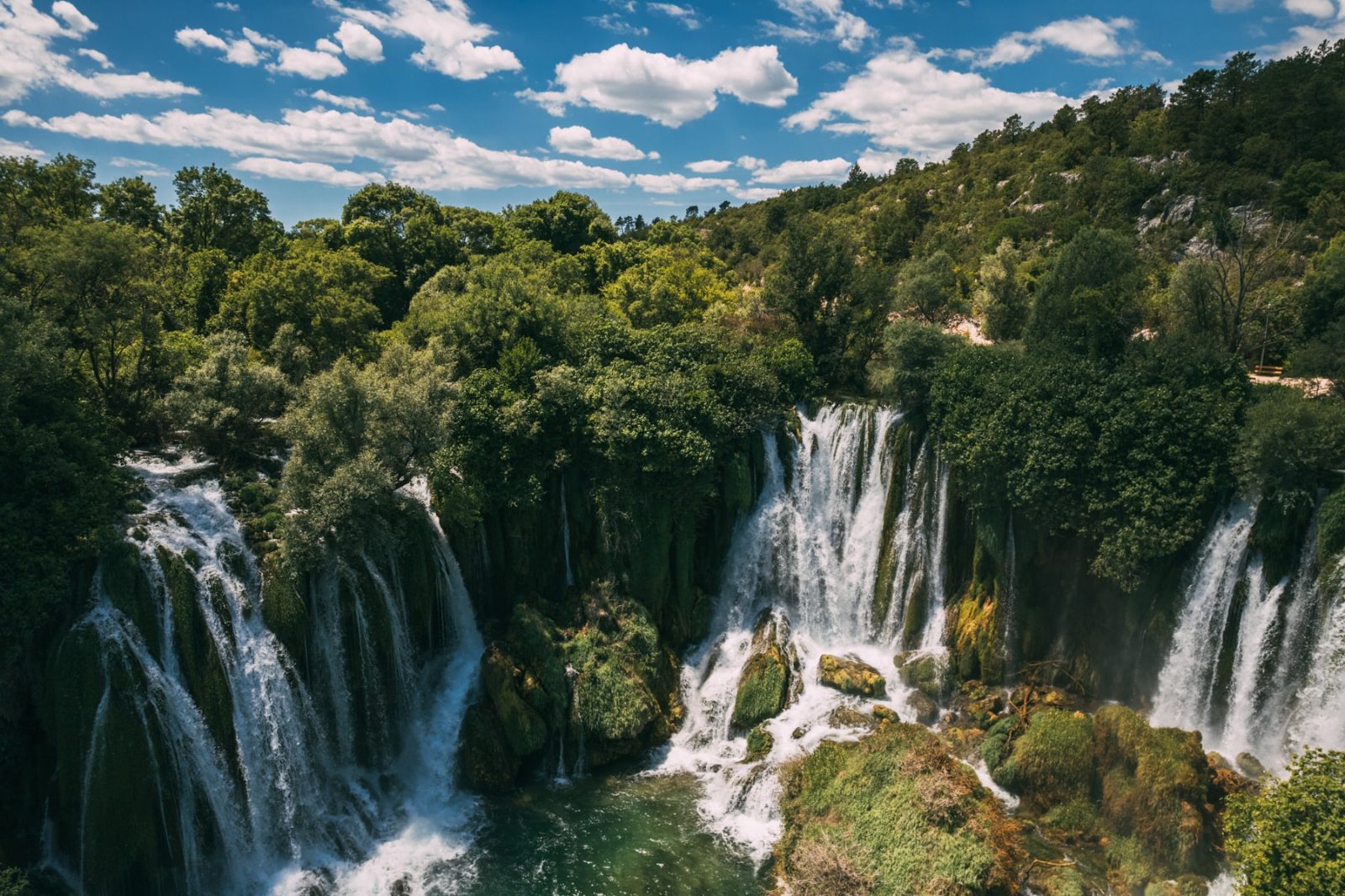
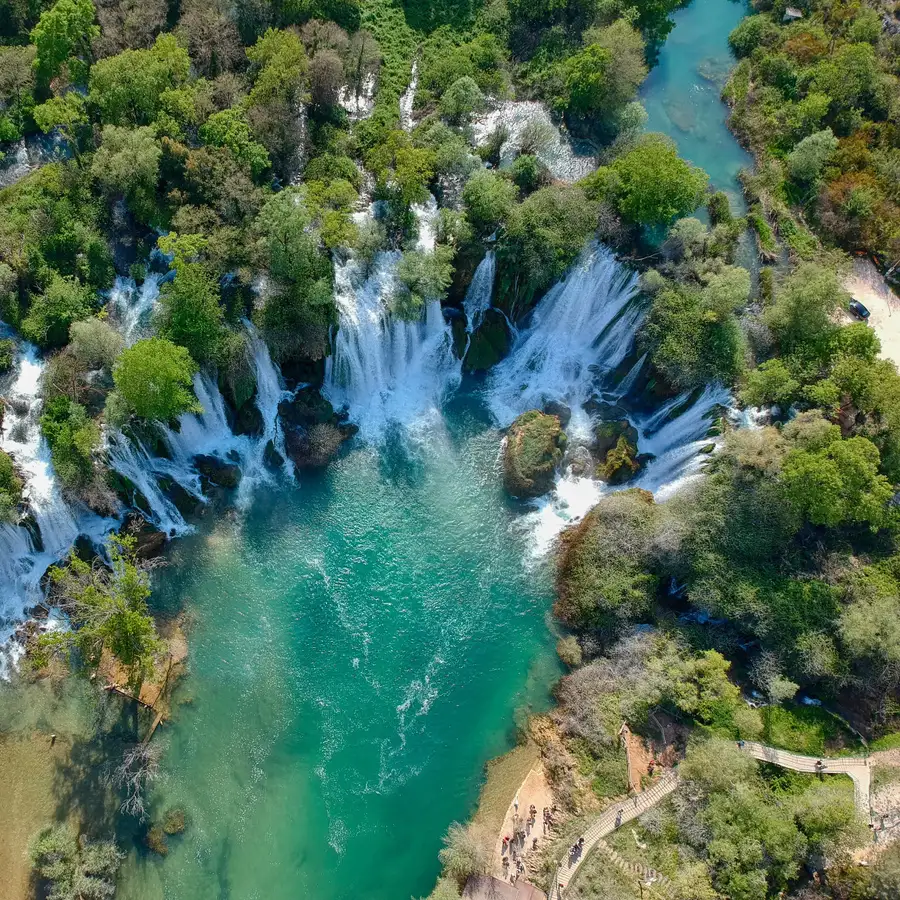
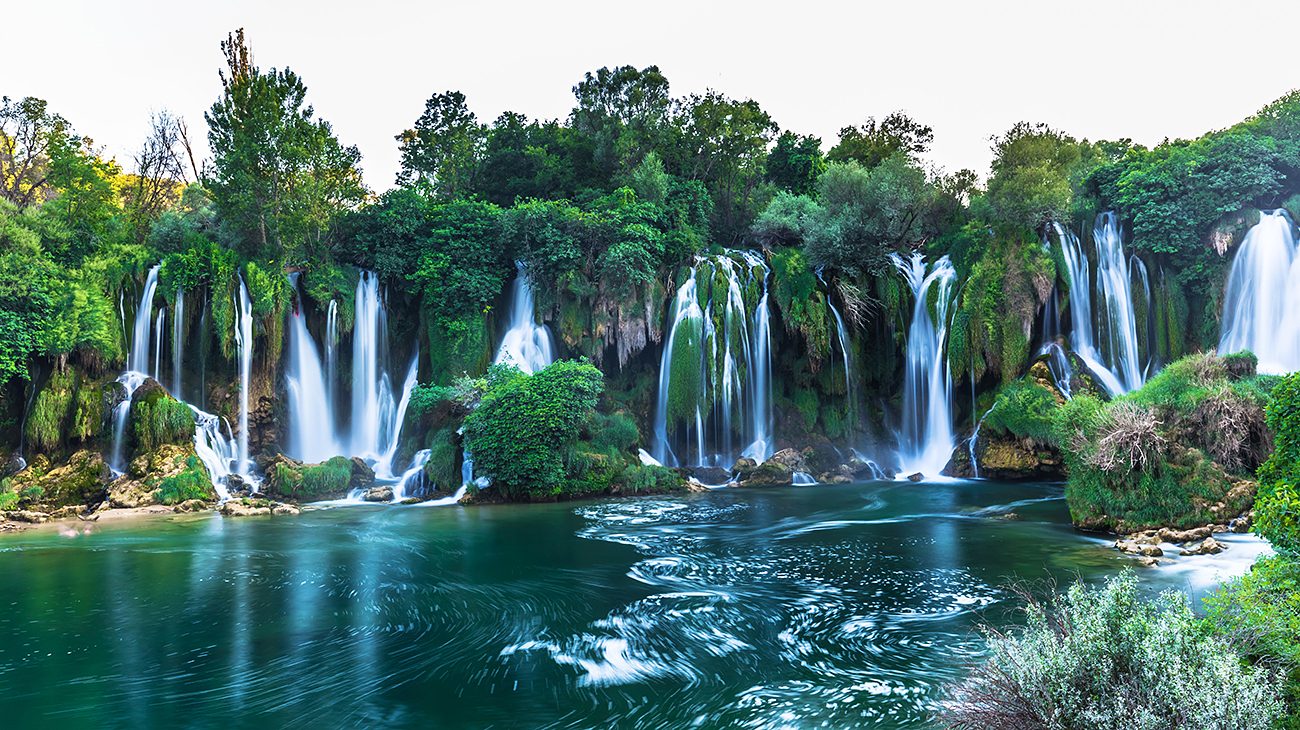
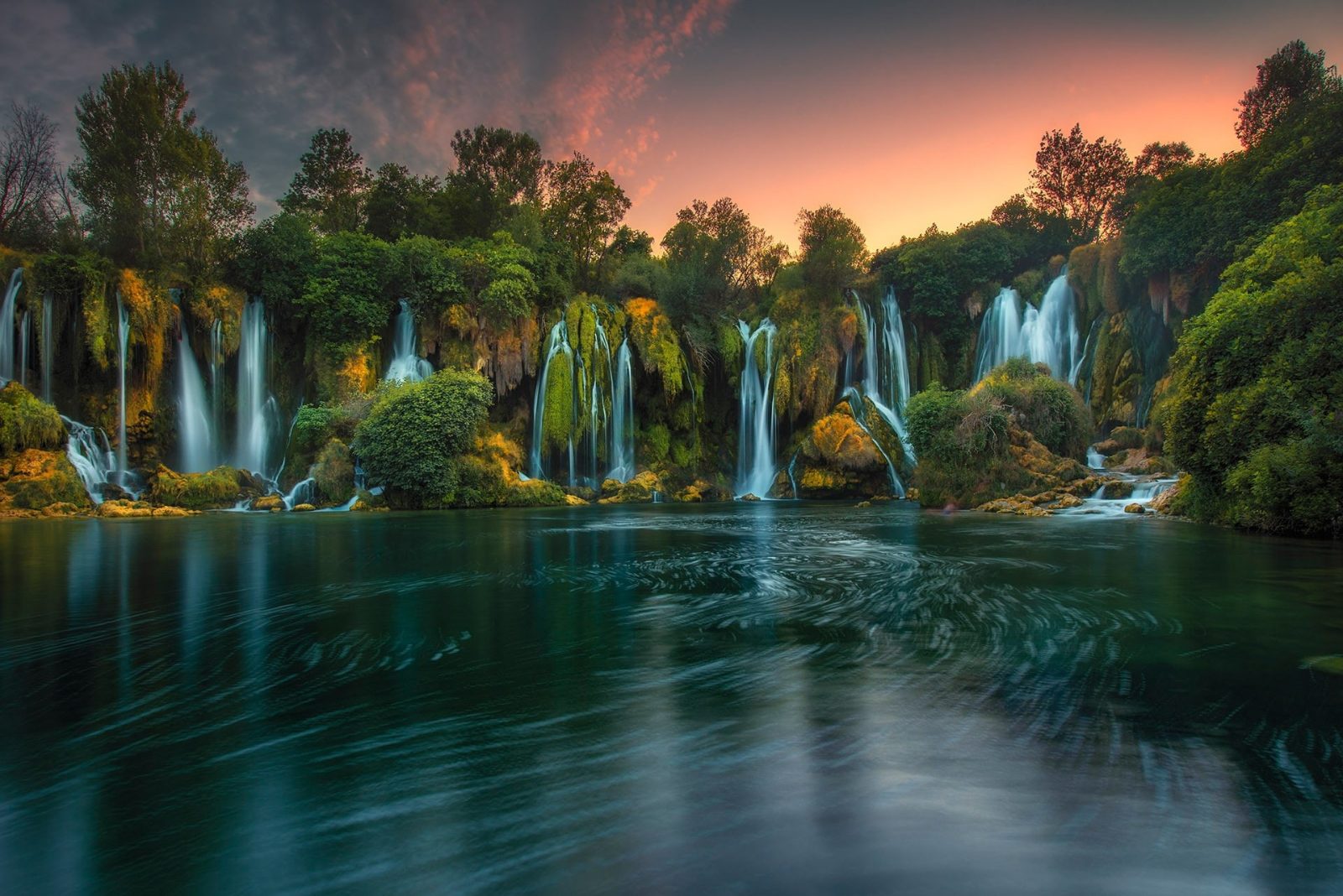
The horseshoe-shaped main cascade drops roughly 25 meters into a wide turquoise basin fed by the Trebižat River. Its width, spanning around 120 meters during high water, makes it one of the broadest waterfalls in Herzegovina.
A series of elevated wooden walkways and platforms line the upper rim of the basin, giving visitors an unobstructed view down onto the falls and swimming area. They were built to protect the surrounding vegetation while allowing close access to the edge.
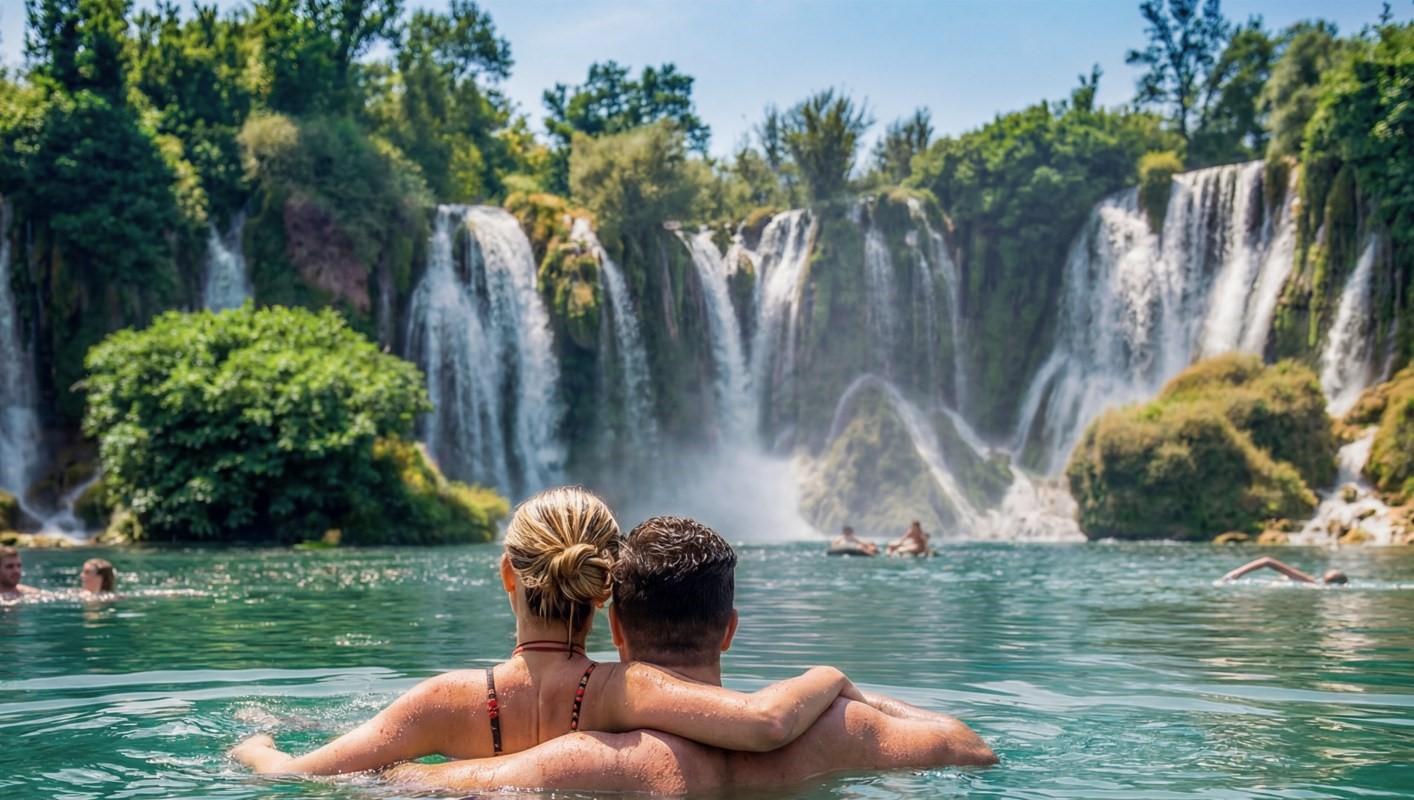
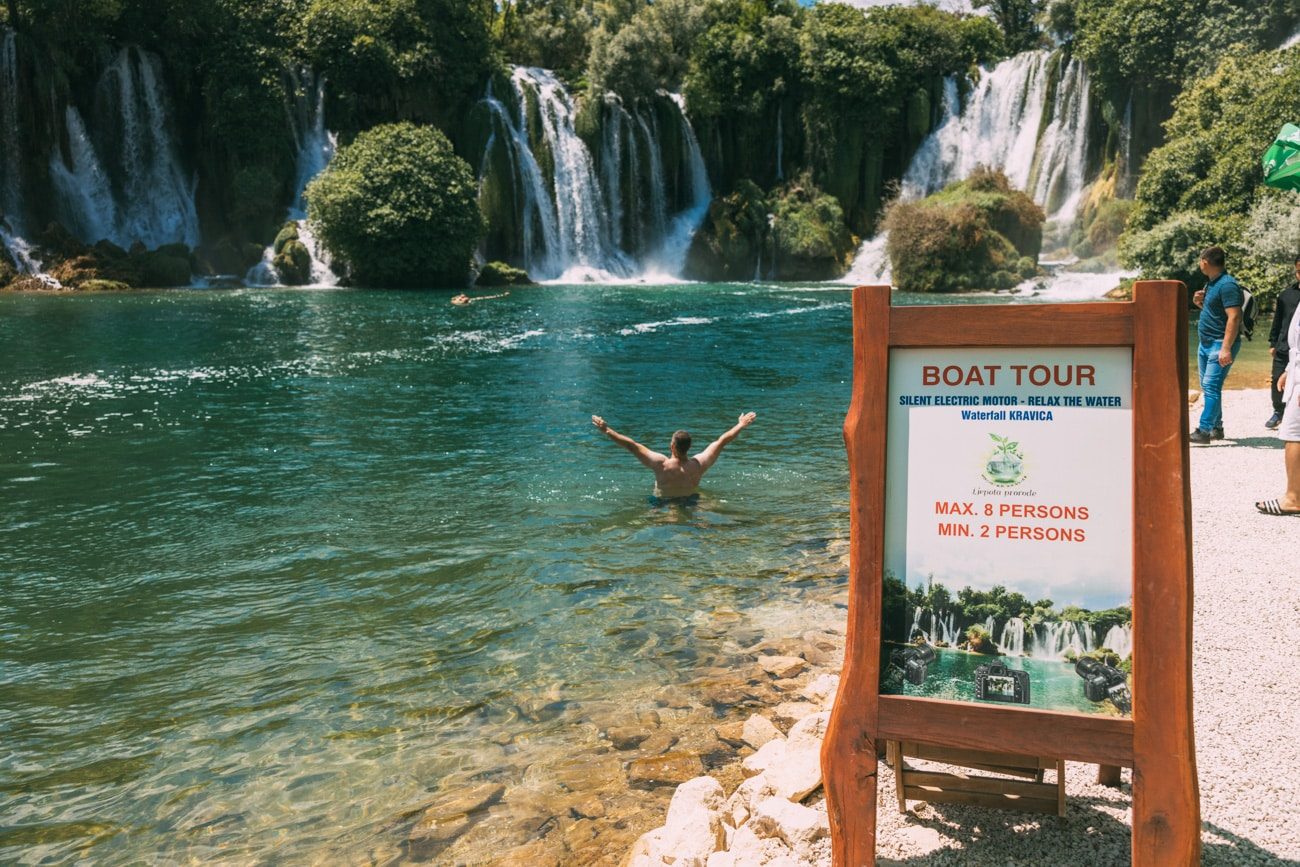
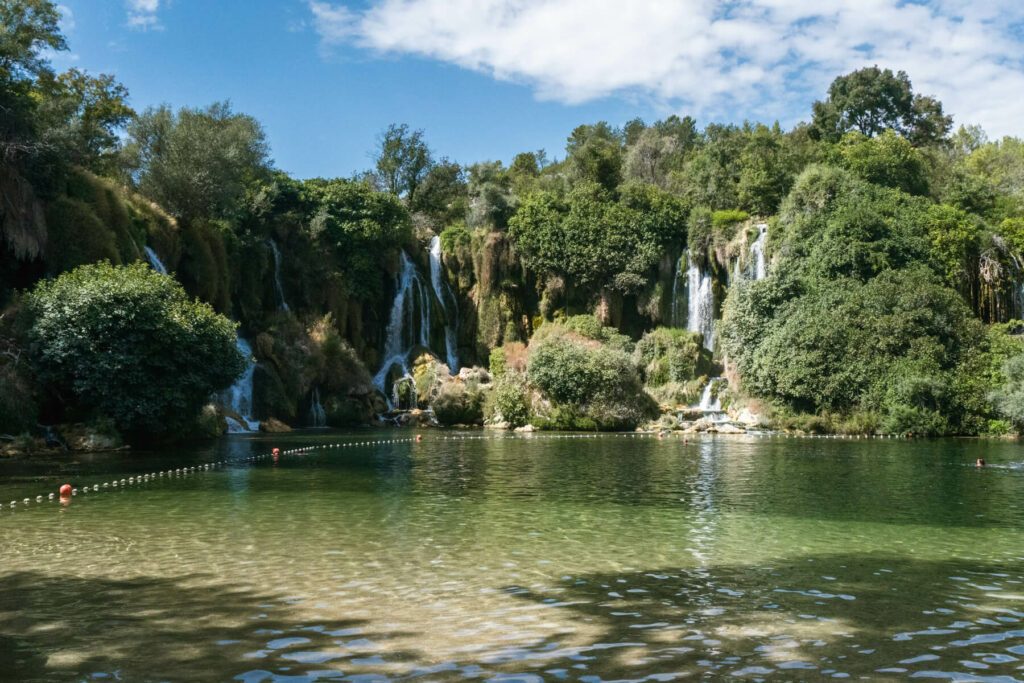
Below the main cascade lies a wide, calmer pool where swimming is permitted away from the strongest currents. Water temperature stays cool year-round due to constant inflow from the Trebižat River, even when summer air temperatures exceed 30°C.
A gravel path follows the Trebižat River along the basin's edge, offering side views of the falls from ground level rather than from above. The trail also connects to spots where local boat rides sometimes depart during peak season.
The plateau above the falls holds the ticket booth, small restaurants, and the starting point of the descent path. From here, the sound of the cascade is audible well before the waterfall itself comes into view.
A small seasonal train or shuttle sometimes carries visitors between the upper plateau and the lower falls for those who prefer not to walk the full descent. It operates only during busier months and for an additional small fee.
You cross the Croatian border at Metković shortly after eight, the coach climbing through the karst valleys of lower Herzegovina as the Neretva widens into oxbow loops.
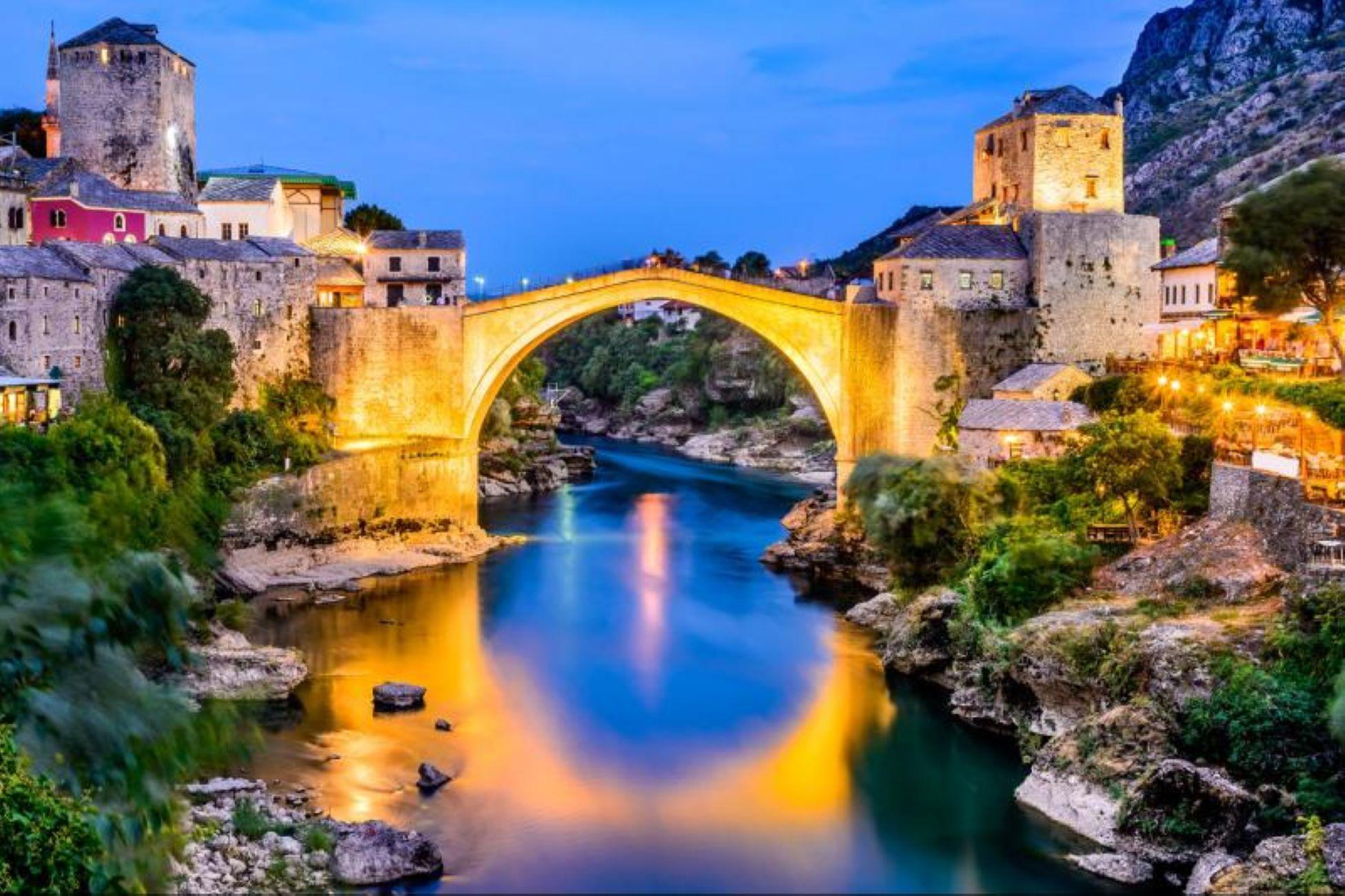
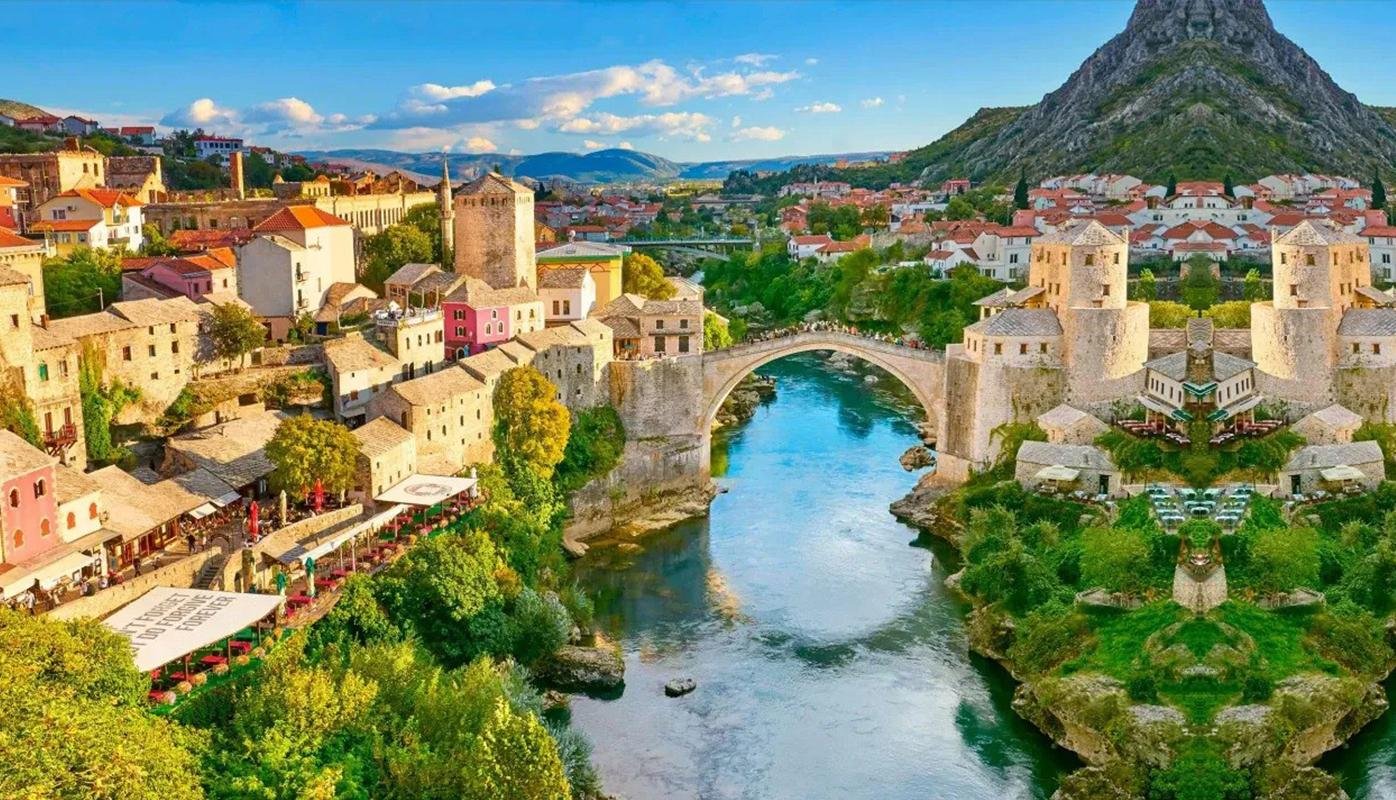
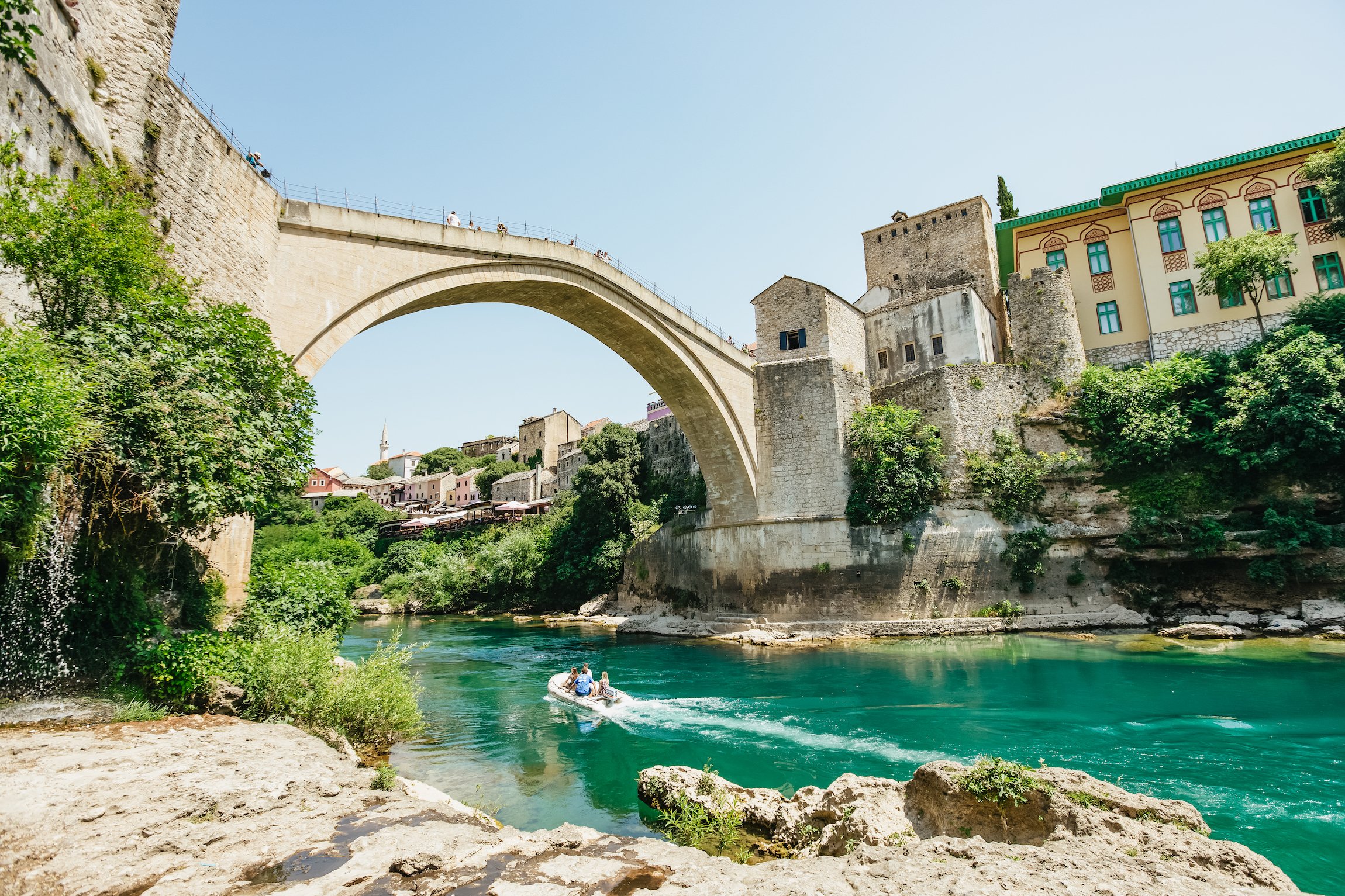
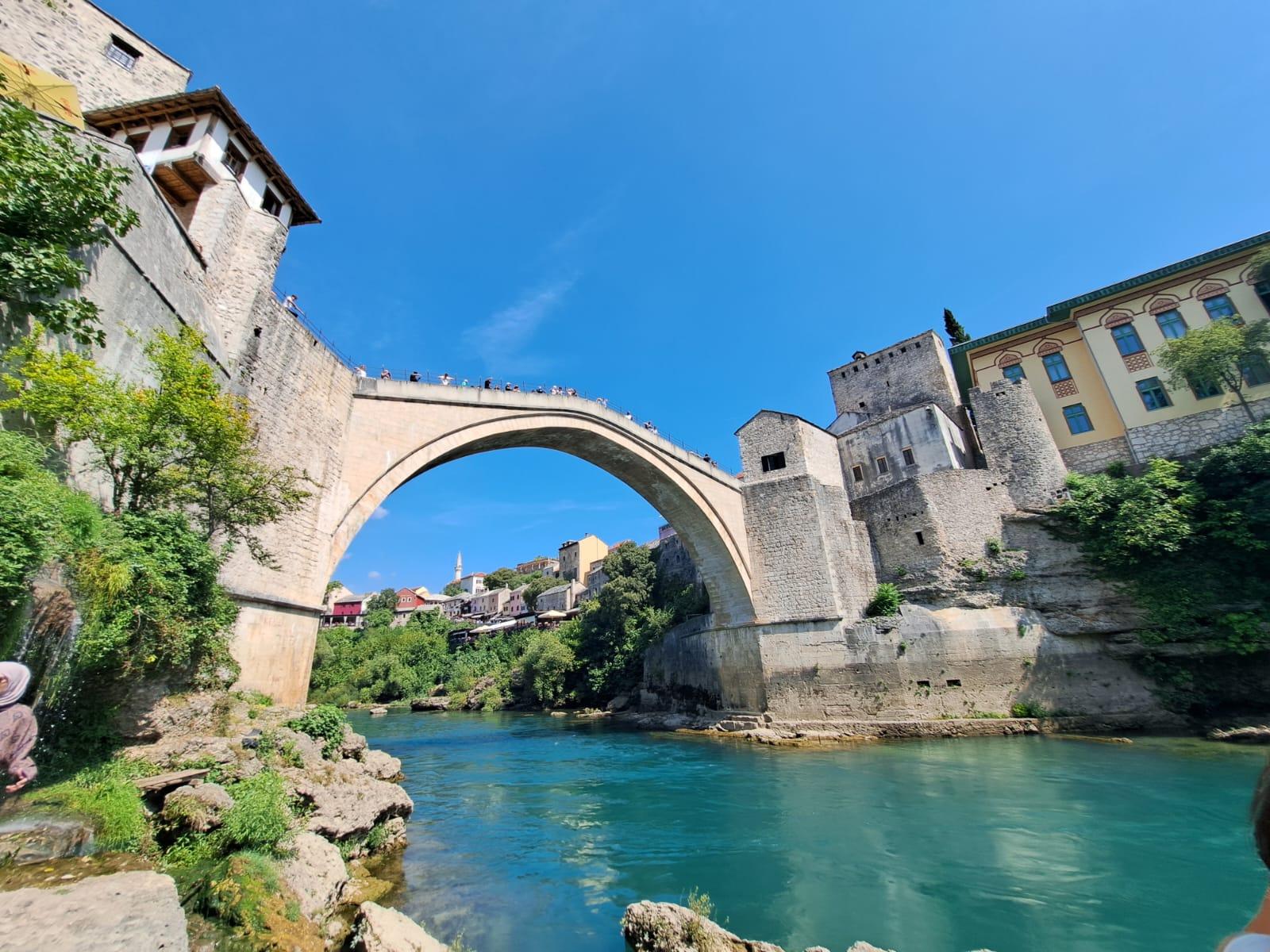
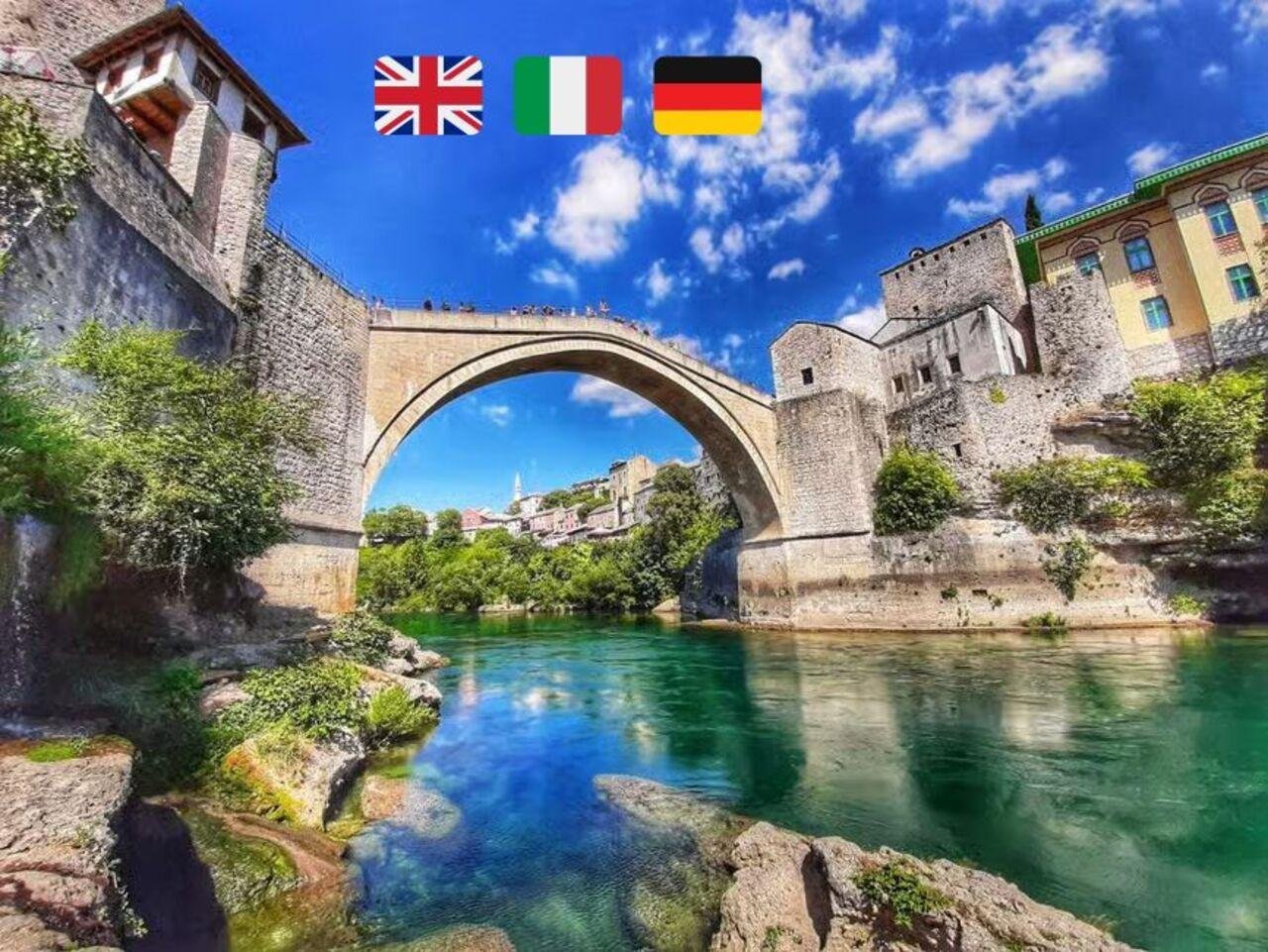
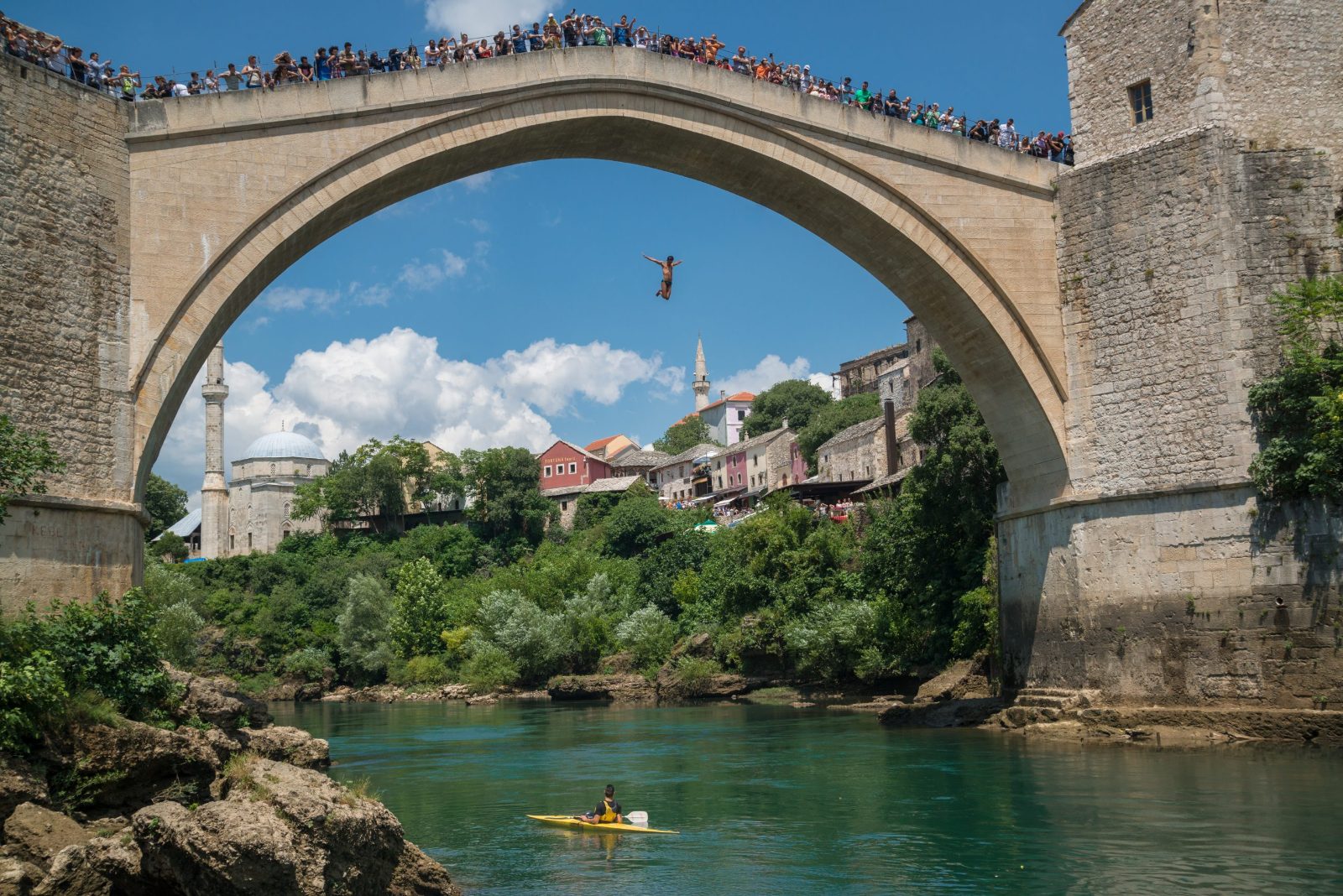
Mostar appears first: you walk the polished limestone of Stari Most, feeling the arch curve underfoot, and watch a bridge diver negotiate his fee with a cluster of German tourists before launching into the jade-green Neretva 24 metres below. The bazaar smells of ćevapi smoke and copper polish. You photograph the minaret of Koski Mehmed Pasha mosque framed against the bridge's single span, then return to the coach.
Kravice arrives an hour later. You descend a switchback footpath through hornbeam forest, the roar of water audible before the falls come into view. The amphitheatre opens suddenly: a 120-metre crescent of white water, divided into dozens of separate veils by travertine fins and submerged boulders. You walk the lower boardwalk to the main viewing platform, where spray coats your camera lens in fine mist. If you arrive between June and August, the plunge pool fills with swimmers; in early autumn, when the tour departs at ten-thirty and the temperature hovers at 16°C, you have the basin nearly to yourself. The water is the pale green of unripe olives, stained by dissolved limestone. You spend 90 minutes here—enough to circle the lower trail, climb to the upper café for a macchiato, and return to the coach by noon.
All the details about your upcoming adventure in one place
Combine UNESCO-listed Ottoman architecture with natural swimming at Bosnia's most visited cascade on mostar and kravice waterfalls tours. This full-day excursion links the iconic Stari Most bridge with the tufa barrier formations of Kravice, where spring melt creates 25-meter curtain falls across the Trebižat River. Most mostar and kravice waterfalls tour departures allow 2–3 hours at the falls for swimming, photography, and optional cliff jumping from marked platforms.
The Trebižat River drops 25 metres across a 120-metre-wide amphitheatre of tufa stone, forming a curtain of water that the local Croat population has known for centuries but the wider world discovered only after the Yugoslav conflicts ended in 1995.
Kravice—pronounced KRAH-vee-tseh—remained effectively inaccessible to casual visitors until the mid-2000s, when rudimentary footpaths were cleared and the first tour operators began running mostar and kravice waterfalls day trips from the Dalmatian coast. The falls themselves are older by millennia: travertine terraces accumulate at roughly one centimetre per decade, meaning the current formation required at least twenty thousand years of calcium carbonate precipitation. Unlike the igneous gorges of Iceland or the sandstone canyons of the American Southwest, Kravice is a living sculpture—algae, moss, and riparian vegetation bind the porous rock, and seasonal flooding reshapes the plunge pools each spring.
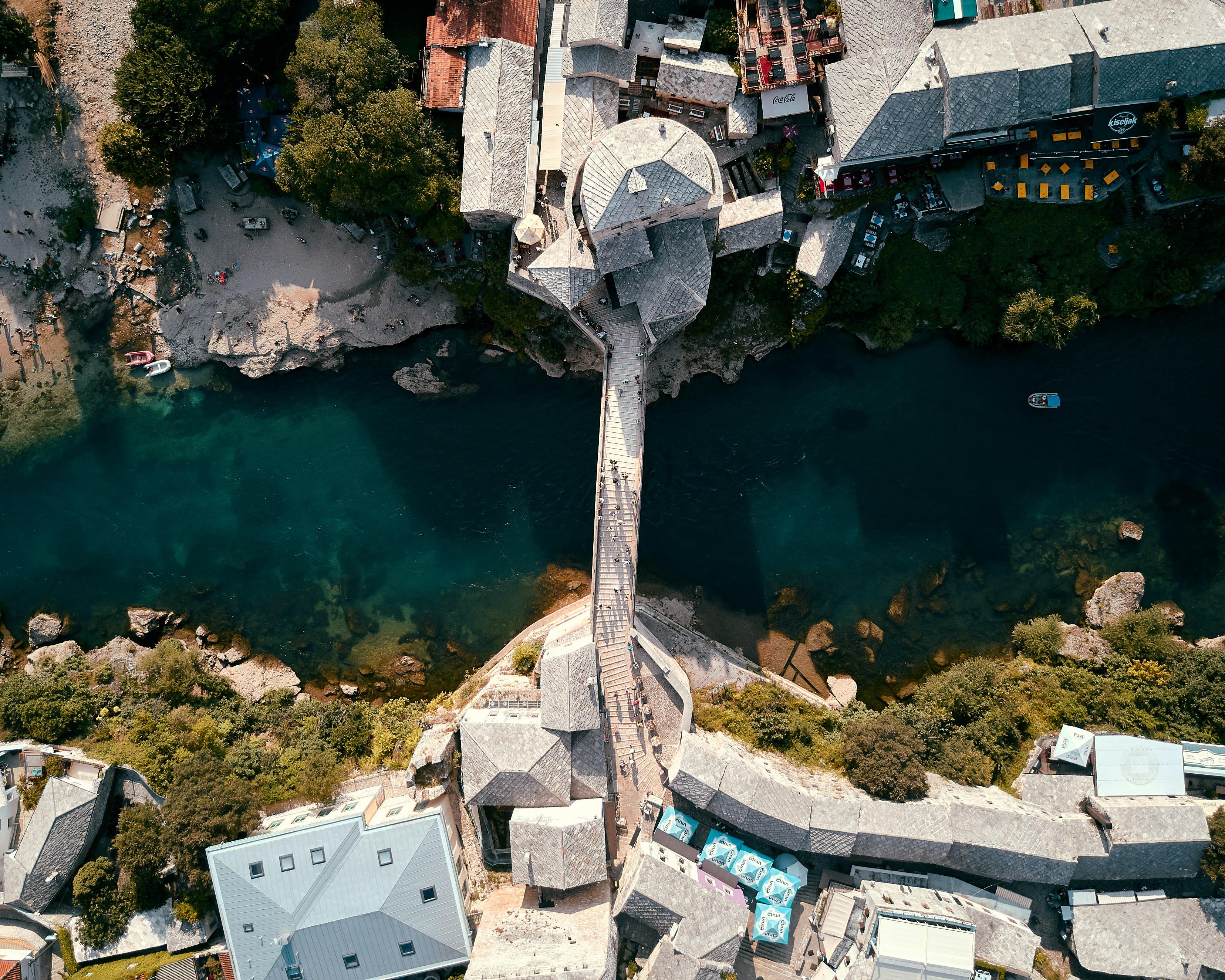
Mostar, 40 kilometres north, anchors most itineraries. The reconstructed Stari Most bridge, destroyed by Croatian artillery in November 1993 and rebuilt stone-by-stone using Ottoman-era quarrying techniques, reopened in July 2004. The 16th-century original was commissioned by Suleiman the Magnificent and designed by Mimar Hayruddin, a pupil of the imperial architect Sinan. Its single limestone arch, spanning 28.7 metres at a height of 24 metres above the Neretva, represented the technical apex of Ottoman civil engineering in the Balkans. The current structure uses 1,088 blocks of tenelija stone from the same Gabela quarries, fitted without mortar and locked by iron cramps, just as Hayruddin specified in 1566. Tour operators offering mostar and kravice waterfalls tours from Dubrovnik typically allocate two hours in Mostar's old town, enough time to walk the Kujundžiluk bazaar, photograph the bridge from the Tara and Halebija tower viewpoints, and visit one of the 17th-century Ottoman houses converted into small museums.
The combination itinerary emerged organically. Mostar lay 140 kilometres from Dubrovnik, a three-hour coach ride each way; adding Kravice, which sits directly on the return route, required only a 30-minute detour. By 2010, the mostar and kravice waterfalls semi-private tour from Dubrovnik had become the highest-volume cross-border day trip from Croatia, carrying an estimated 180,000 passengers annually by 2019. Split-based operators followed, though the 250-kilometre distance makes mostar and kravice waterfalls from Split a longer proposition—typically 13 hours door-to-door. The falls themselves remain undeveloped in the resort sense: a gravel car park, a ticket kiosk, wooden boardwalks, and a single seasonal café. Swimming is permitted in the main basin from May through September, when water temperature reaches 18–22°C. The site closes entirely from November through March, when the Trebižat swells and the spray freezes into chandelier-like ice formations that few visitors witness.

The Trebižat drops 25 metres across a 120-metre amphitheatre of tufa, forming a curtain that required twenty thousand years of calcium carbonate to build.
Quick-dry clothing and a swimsuit under your clothes work best if you plan to swim below the falls. The descent involves gravel and stone paths, so closed-toe sandals or walking shoes are more practical than flip-flops.
There is no bag scanning or security checkpoint at the entrance to Kravice Waterfall, just a ticket booth where the entrance fee is collected. Keep valuables in a waterproof or zip-top bag since the walk down to the water involves some spray and uneven ground.
Personal photography and filming are permitted throughout the site, including from the wooden viewing platforms above the falls. Drone use is generally restricted around the waterfall area, so check with staff at the entrance before flying one.
Children can swim in the designated area below the falls, but the current near the cascade itself is strong and unsuitable for young or inexperienced swimmers. Life jackets are not provided on-site, so families should bring their own for smaller children.
The path from the parking area down to the waterfall basin is steep, unpaved in sections, and includes stairs, making it difficult for wheelchair users or visitors with limited mobility. There is no dedicated accessible route or elevator to the lower viewing areas.
A cluster of small restaurants and snack stands sits near the parking area at the top of the site, but bringing your own packed snacks and water onto the paths and swimming area is allowed. Glass containers are discouraged near the water for safety reasons.
Quietest weekday
Buses increase from midday
Busiest day, arrive early
Popular with day-trippers from Mostar
Hours
08:00–20:00 daily (summer season)
Address
Kravice Waterfall, 88323 Studenci, Bosnia and Herzegovina
Terrain
Steep gravel paths and stairs down to the falls, not wheelchair-friendly
Best arrival
08:30–10:30 for cooler temperatures and fewer tour buses
Entrance fee
15 BAM per adult (summer season)
Car · 40 minutes from Mostar · Parking fee typically a few BAM
Drive from Mostar via the M17 and local roads toward Studenci, roughly 40 minutes each way with parking available near the entrance.
Public transport · 1–1.5 hours from Mostar · Bus fare plus taxi cost
Direct public bus service is limited, so most independent travelers combine a bus to Ljubuški or Čapljina with a taxi for the final stretch.
Taxi · 40 minutes from Mostar · Negotiated fare, higher than bus
Taxis from Mostar can be arranged directly to Kravice Waterfall and back, often with a wait-and-return arrangement.
Bike · Around 1 hour from Čapljina · Free aside from bike rental
Cycling from nearby towns like Čapljina is feasible on rural roads for experienced cyclists but not recommended from Mostar itself.
Independent visitors pay the 15 BAM entrance fee on arrival, so no advance cancellation is needed. Guided Mostar and Kravice Waterfalls tours booked through operators typically allow free cancellation up to 24–48 hours before departure, with the entrance fee refunded as part of the tour price if canceled in time.
Recommended time
3-4 hours
Most travelers find that 3-4 hours provides sufficient time to experience the limestone amphitheater and surrounding turquoise pools when combining a trip to Mostar and kravice waterfalls. Guests utilizing mostar and kravice waterfalls tours often experience peak density between midday and late afternoon, making a strategic entry essential. Those booking mostar and kravice waterfalls tickets independently should adjust their stay to account for the transit time required between regional landmarks.
Crowd levels through the day
Weather · crowds · average price — dots go green to amber to red as each metric rises.
Water levels are highest after winter rains, making the falls especially forceful. Temperatures are mild, roughly 15–22°C, and crowds are thinner than in summer.
Peak season with warm temperatures often above 30°C, drawing large numbers of visitors and tour buses from Mostar. Swimming is most popular now, but water levels are lower than in spring.
Currently autumn, with fewer crowds and comfortable temperatures around 18–25°C in early autumn, cooling toward October. Water flow is typically reduced compared to spring but the site remains open daily.
Cold, wet, and quiet, with far fewer visitors and sometimes muddy access paths. Some seasonal food stalls near the parking area may be closed.
Aim for the 08:30–10:30 window to beat tour buses arriving from Mostar and to enjoy cooler morning temperatures.
The 15 BAM entrance fee and most stalls near the parking area only accept cash in Bosnian convertible marka.
The riverbed and swimming area have loose stones, so sturdy water shoes are more practical than bare feet.
A small paid train sometimes runs between the parking lot and the lower falls, useful if you prefer not to walk the descent.
Many visitors pair a morning at the falls with an afternoon exploring Stari Most and the old bazaar in Mostar.
Swim only in the marked calmer basin, since the water near the main cascade has a strong pull.
Spray from the falls can reach nearby platforms, so keep phones and cameras in a waterproof pouch.
Kravice Waterfall, 88323 Studenci, Bosnia and Herzegovina
Main entry point for independent visitors and organized Mostar and Kravice Waterfalls tour groups
Get directionsKravice Waterfall, 88323 Studenci, Bosnia and Herzegovina
Entrance fee of 15 BAM collected here before the descent to the falls
Get directionsThe travertine amphitheater of Kravice formed over millennia as calcium carbonate deposits built up along the Trebižat river, creating a tufa barrier that today reaches 25 meters in height and spans 120 meters across. The river carves through karst limestone typical of Herzegovina's Dinaric geology, with underground springs feeding its year-round flow. Ottoman cadastral records from 1604 reference the Studenci settlement near the falls, where farmers used the Trebižat's consistent water supply for milling grain. Mostar itself, founded in the 15th century as an administrative center, became the region's gateway after the Old Bridge was completed in 1566 under Suleiman the Magnificent's patronage. During the Austro-Hungarian period after 1878, European travelers documented the Kravice cascades in botanical surveys, noting the lush riverside vegetation and endemic species thriving in the spray zone. The area remained largely agricultural until the mid-20th century, when Yugoslav-era infrastructure projects improved road access between Mostar and the Trebižat valley. Local communities used the pools for swimming, but no formal tourism infrastructure existed. The 1992-1995 war devastated Mostar—its iconic bridge was destroyed in November 1993—and left the countryside depopulated. Reconstruction began in 1996, with the Old Bridge rebuilt by 2004 using UNESCO oversight and original Ottoman masonry techniques. Kravice emerged as a managed site in the early 2000s when municipal authorities installed pathways, viewing platforms, and seasonal concessions. The mostar and kravice waterfalls combination became a standard day-tour route by 2008, linking the restored Ottoman bridge with the natural cascade. Today the falls attract over 100,000 visitors annually, though winter floods occasionally close access when the Trebižat swells beyond its banks.
Travertine deposits begin accumulating along the Trebižat river, forming the foundation of the future waterfall barrier.
Ottoman land registers document Studenci village near the falls, with mills using the river's hydraulic power.
Mostar's Old Bridge is completed under Suleiman the Magnificent, establishing the city as Herzegovina's administrative hub.
Austro-Hungarian naturalists catalog Kravice's flora and tufa formations during regional geological surveys.
Mostar's Old Bridge is destroyed during the Bosnian War; the Trebižat valley is largely abandoned.
UNESCO-led reconstruction of Mostar's bridge is completed using original 16th-century Ottoman methods.
Kravice gains formal visitor infrastructure; mostar and kravice waterfalls tours become a standard Herzegovina itinerary.
Positioned near the entrance gate, this vantage point provides a wide-angle perspective of the entire tufa amphitheater and the Trebižat River basin. Use this spot to capture the scale of the cascades before beginning your descent into the valley.
As you walk down the winding path, the foliage frames the falling water, offering a natural vignette effect. This location is ideal for photographing the emerald green pools and mossy limestone rocks while navigating the descent of mostar and kravice waterfalls.
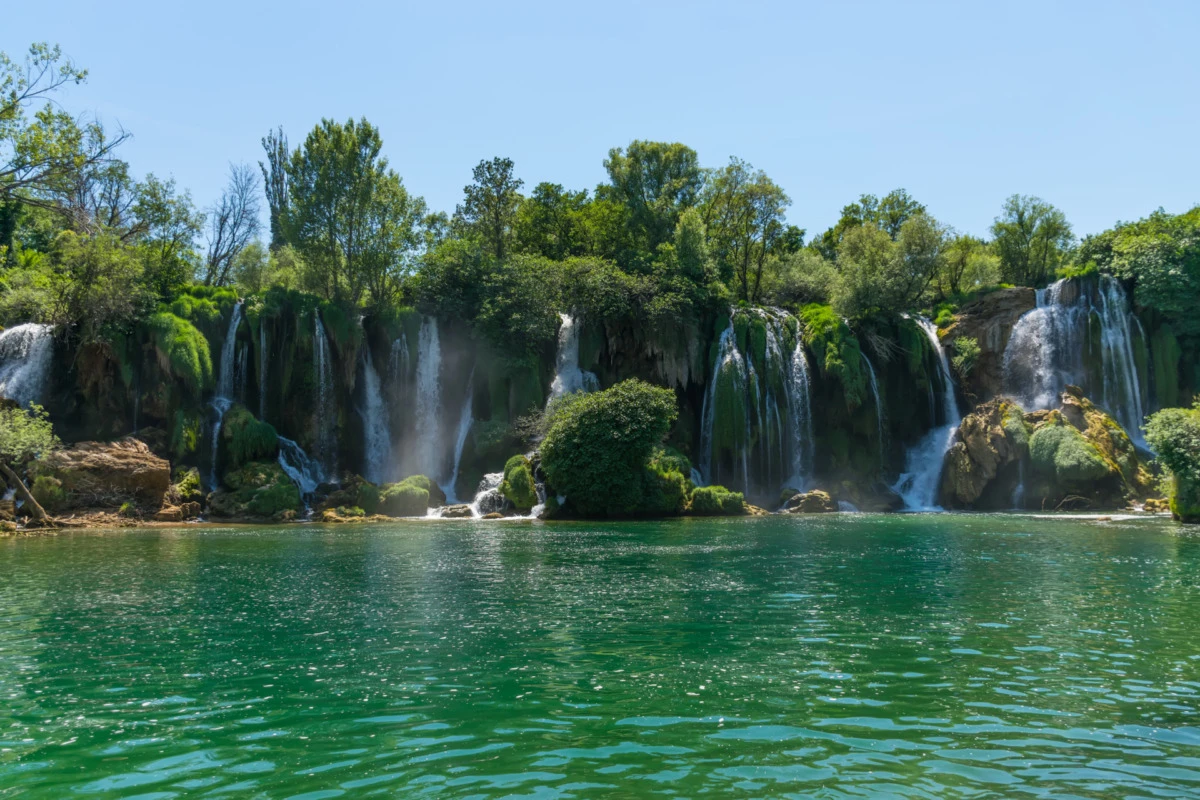
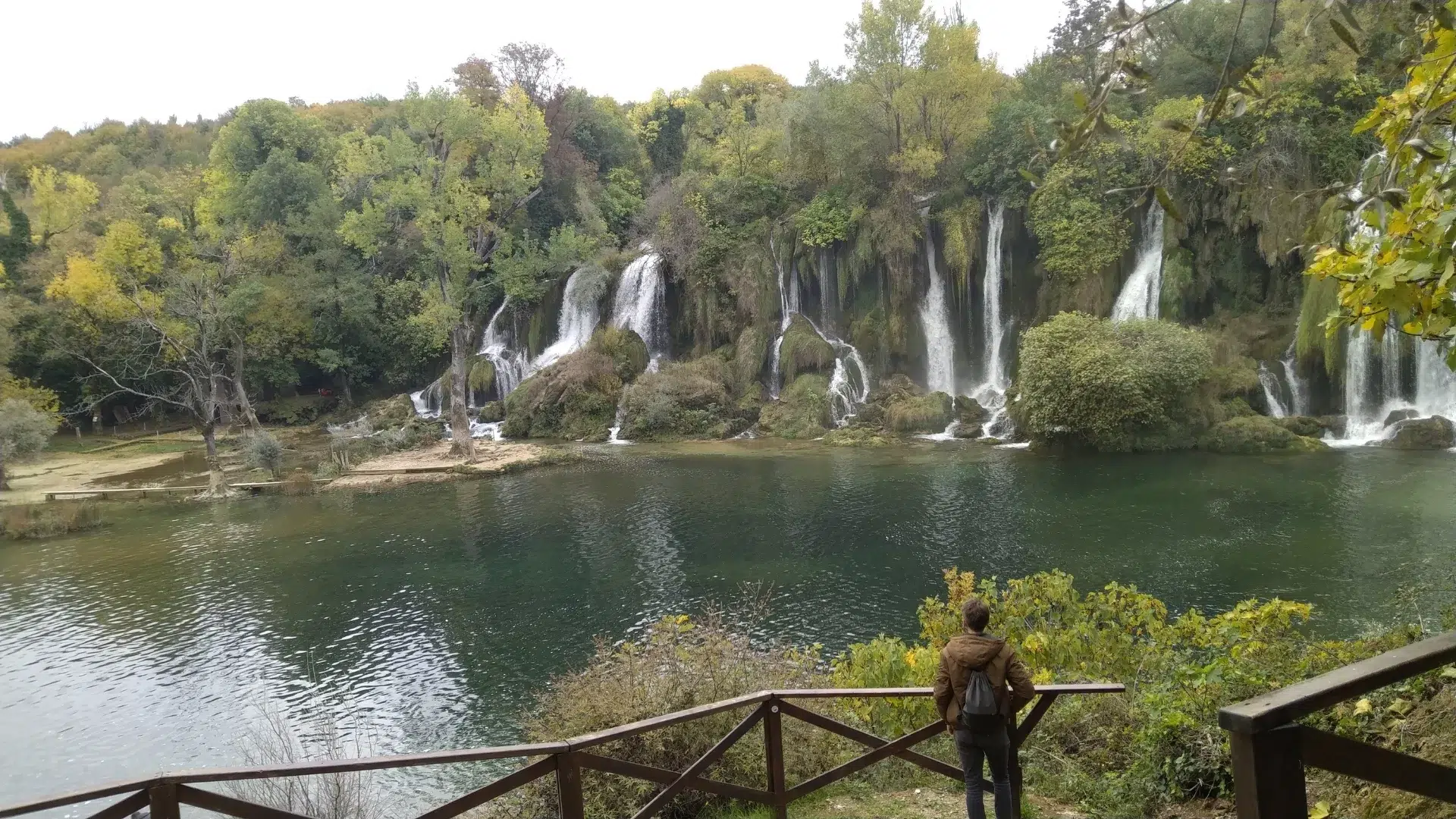
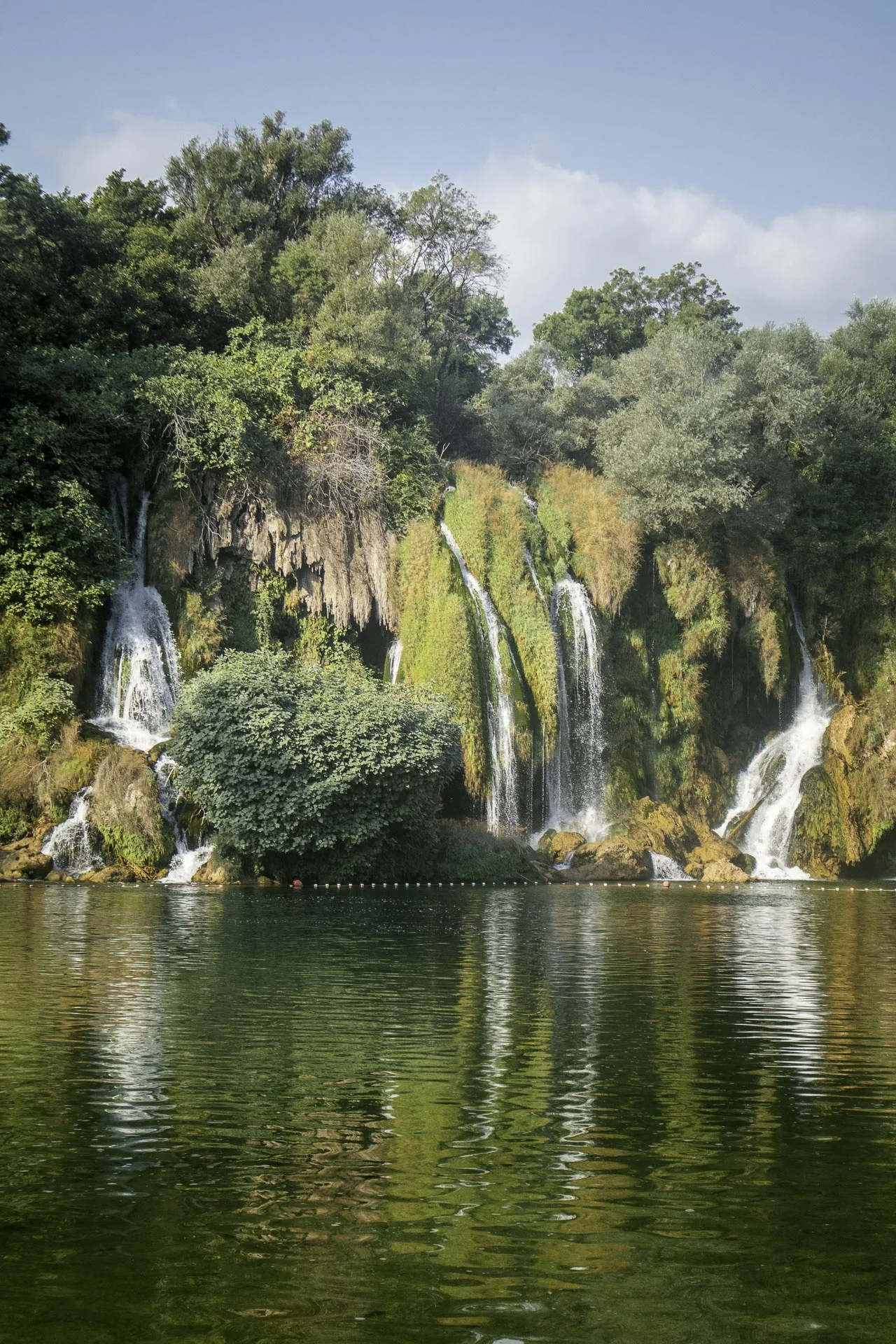
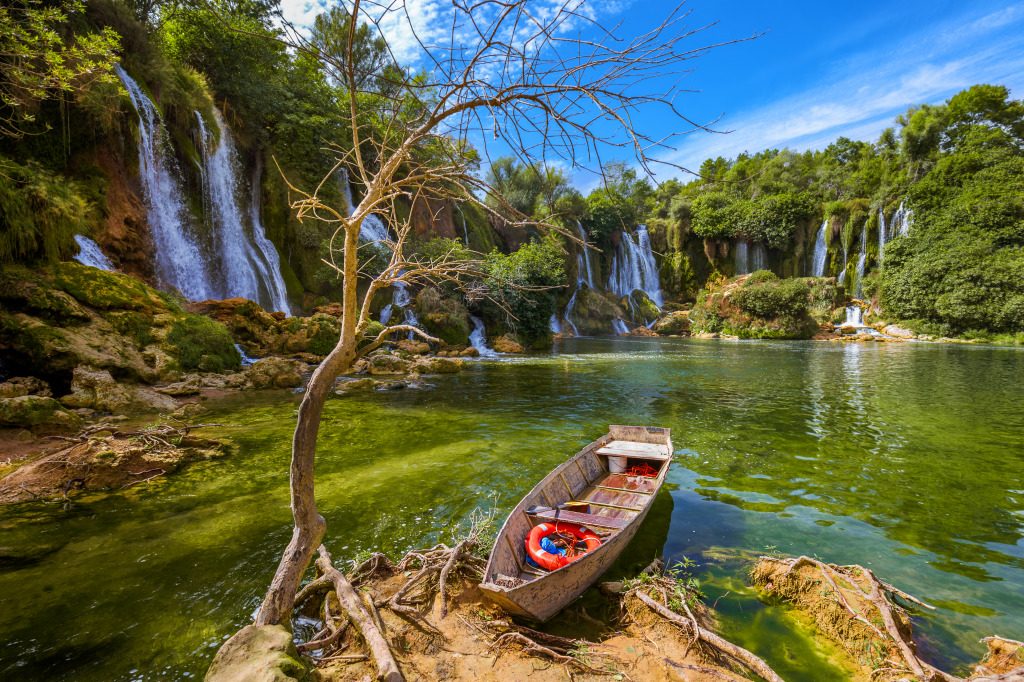
Stand near the water level close to the boat docking area to gain a reflection shot of the falls against the calm surface. This angle creates a foreground interest using the wooden piers, perfect for those seeking high-quality mostar and kravice waterfalls tours content.
Follow the path along the western edge toward the smaller rapids to isolate individual segments of the waterfall through the trees. This perspective provides a detailed study of the water flow and provides a quieter background for your mostar and kravice waterfalls tickets keepsake photos.
Dining options near mostar and kravice waterfalls are divided between casual refreshment stands located at the base of the cascade and traditional establishments in the historic city center. Many visitors on mostar and kravice waterfalls tours prefer enjoying a meal in the city after securing their mostar and kravice waterfalls tickets.
Located right above the limestone cliffs, this spot offers views of the travertine barriers and serves grilled meats and local refreshments. It is ideal for a lunch break during a typical mostar and kravice waterfalls tour.
Real experiences from real travelers
We visited both Mostar and Kravice waterfalls in one day from Dubrovnik. The waterfalls were refreshing after the historic walk through Mostar's old town. Water temperature in August was cool but swimmable. Arrived at 10am and crowds were manageable.
The travertine pools at Kravice are surrounded by lush forest and the cascade creates a natural amphitheater. We spent three hours swimming and exploring the wooden walkways. Bring water shoes for the rocky areas.
This mostar and kravice waterfalls tour exceeded expectations. The 25-meter cascade is impressive and the setting feels remote despite being accessible. Local restaurants near the entrance serve fresh trout.
Visited on a Saturday in early September and the swimming area was packed by noon. The waterfall itself is stunning and worth seeing. Consider weekday visits or arriving before 9am.
Went in late May when water flow was strongest from snowmelt. The volume of water cascading over the tufa formations was remarkable. Fewer tourists than summer months but water was cold.
My children loved swimming in the natural pools and the shallow areas are safe for younger kids. The combination of Mostar's cultural sites and Kravice's natural beauty made for a balanced itinerary.
The kravička vodopad lives up to photos. We rented inner tubes from vendors and floated in the current below the falls. The mist creates rainbows in afternoon light.
After the tourist density in Mostar old town, Kravice felt like a peaceful escape. The river Trebižat creates multiple swimming zones and the surrounding canyon is scenic for hiking.
This day trip from the coast is worthwhile for anyone exploring Herzegovina. The amphitheater formation of the waterfalls and the turquoise water color create a photogenic landscape. Wooden platforms provide good viewing angles.
Our mostar and kravice waterfalls tickets included transportation and three hours at the falls. Guide provided historical context about the Trebižat river ecosystem and the travertine formation process. Swimming time was adequate.
Everything you need to know for your journey
Kravice Waterfall is open daily from 08:00 to 20:00 during the summer season, with the same hours across all seven days of the week.
The paths down to the falls are steep, unpaved in places, and include stairs, so the site is not well suited for wheelchair users or visitors with significant mobility limitations.
There is no security screening or bag check at the entrance, only a ticket booth where the 15 BAM entrance fee is collected before you head down to the falls.
Personal photography and video are allowed throughout the site, including from the viewing platforms, though drone use generally requires prior approval from staff.
Arriving between 08:30 and 10:30 offers cooler temperatures and fewer tour buses, making it the best window on any Mostar and Kravice Waterfalls tour to avoid peak crowds.
Quick-dry clothing and a swimsuit worn underneath are practical, along with closed-toe water shoes for the gravel and stone paths down to the basin.
Bringing your own snacks and water is fine, and small restaurants near the parking area also sell food, though glass containers are discouraged near the swimming zone.
Kravice Waterfall is roughly 40 minutes by car from Mostar via the M17 and local roads, with parking available near the entrance for independent drivers and tour groups.
Children can swim in the designated calmer area below the falls, but the current near the main cascade is strong, so close supervision and personal life jackets are recommended.
Independent visitors simply pay the 15 BAM fee on arrival, while guided tours booked in advance typically offer free cancellation 24–48 hours before departure with a full refund.
The falls pair well with a visit to Mostar's Stari Most bridge and old bazaar, as well as the nearby town of Čapljina and the pilgrimage site of Međugorje.
The entrance fee to Kravice Waterfall is 15 BAM per adult during the summer season, payable in cash at the ticket booth.
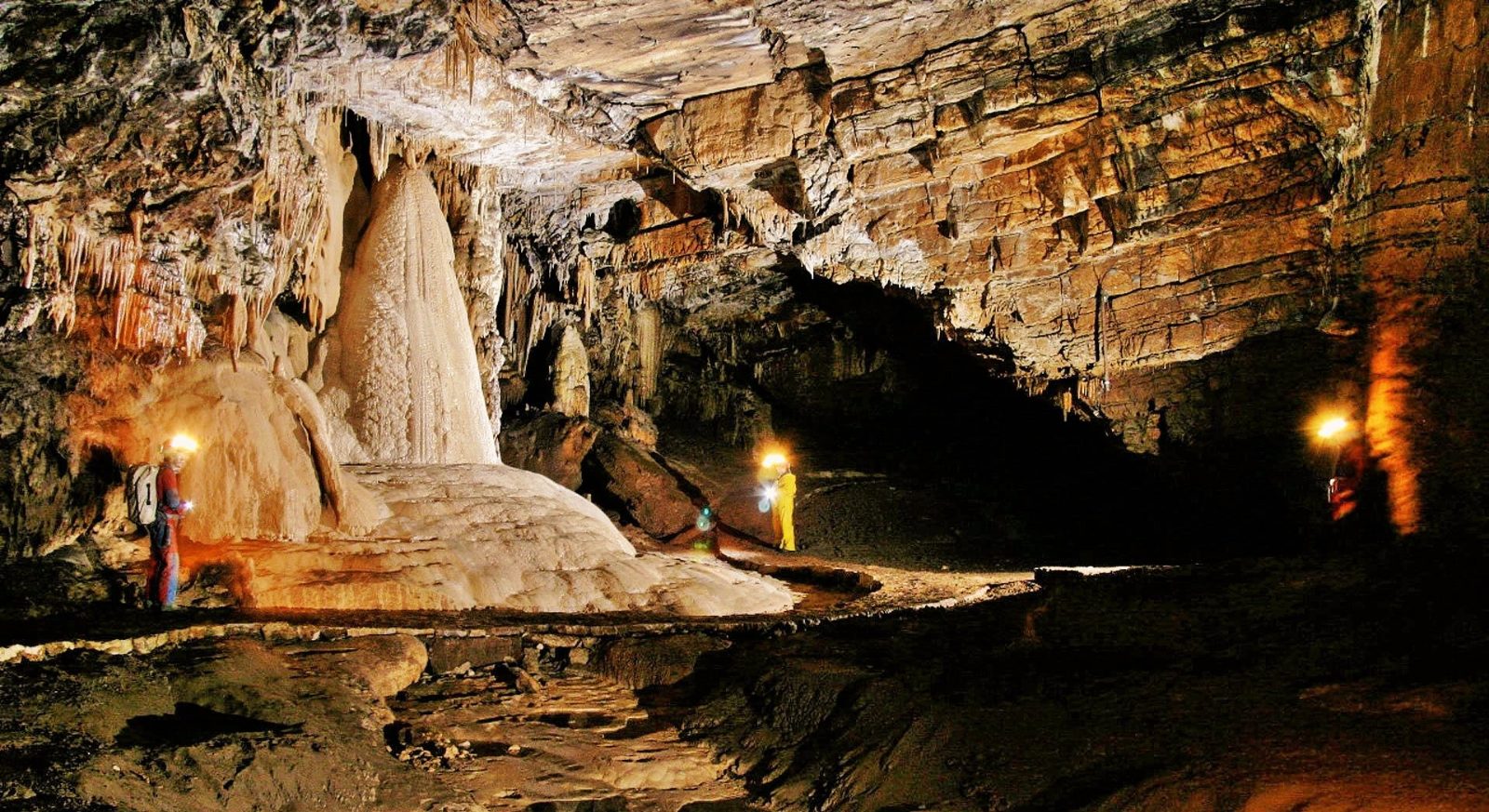
One of the largest cave systems in the Balkans, known for its underground rivers and lakes.
The river that feeds Kravice Waterfall, popular for kayaking trips upstream and downstream.
A small rural village near the falls with traditional stone architecture typical of the Herzegovina region.
A small town center with cafes and a local market, often used as a gateway to the falls.
Small family-run guesthouses in the villages surrounding the falls, offering simple rooms close to nature.
A nearby town with a handful of mid-range hotels and easy access back to Kravice Waterfall.
Mostar's historic center offers boutique riverside hotels within walking distance of Stari Most, roughly 40 minutes from the falls by car.
A pilgrimage town with a large concentration of guesthouses and hotels catering to visitors touring the region.
Join thousands of happy travelers who have discovered this incredible experience
Book Your Experience Now